Translate

Saturday, 17 January 2015

Every breath you take...


This week's flaneurial reflection comes from a rather comfortable seat on a rather comfortable train that is comfortably travelling at very nearly 200 miles per hour. All is smooth and quiet as we whisk along the track between the cities of Zhuzhou and Guangdong through the somewhat continuously grey Chinese countryside. The coffee on board is a very reasonable 20RMB a 400ml cup (about $3). The subjective realisation of speed only occurs when one chances to glance out of the window and watches endless hills, roads and rivers flashing past at a truly alarming rate.
          I am on my way back from attending a Tai Chi tournament in the City of Liling. The event was rather successful for my friend who managed to win a gold and a silver medal and come home with an 18” plate and a rather large china vase. We had travelled to Liling on the invitation of the Hunan Tai Chi Association, who generously supplied hotel rooms, meals and transport for the both of us from the Friday evening  to the following Monday morning.


          This generosity was much appreciated, as were the facilities of the four star hotel we stayed in. The food was copious and prepared in the local Hunan style (very greasy, very salty, very spicy) but, unfortunately, was not particularly to my tastes. There was something typically Chinese in the way the food was presented though. The dishes, usually a dozen or more, were set upon a glass revolving disk in the centre of the table and one chose from the offered selection whatever one took a fancy to. This style of eating is very communal in nature which is not atypical of the culture here in general. There is a great willingness, almost an expectation, of sharing. If someone orders a bottle of the local alcohol, an horrendously strong brew that fair took my breath away, it is expected that it will be shared by all at the table.
          There seems to be an etiquette to turning the glass centrepiece, an etiquette that stresses the needs of others at the table above oneself. Generally on such a table there is a huge pale of sticky white rice in the centre. Here too there is an etiquette – one makes sure everyone else is supplied with rice before filling one's own bowl. Even within this there is another level where the status of those waiting is to be recognised, with the higher status individuals going first. In practice, this generally implies a respect for age, with the elders being given preference over the youngsters.
          Toasts are often drunk, complete with the usual expression 'gumbei!' (empty glass) proceeded by a chink of one's glass with all and sundry. Again, one needs to make sure one includes everybody who cares to be included and, as a mark of respect, holds one's glass slightly lower than those of higher status (usually best just to presume everyone else is – my personal 'fail proof' method!).
          Throughout my stay in Liling I was treated with great respect and a rather lovely inclusivity.  This is one of the loveliest aspects to the culture here. Once accepted within a given group, one is treated with a great deal of friendly and good natured indulgence. The Chinese, in this way at least, are a very hospitable people.
          The time spent in Liling was enjoyable on many levels bar one, but that exception makes the thought of my upcoming trip to Thailand a pleasant prospect. The quality of the air in these medium sized cities has to be seen to be believed. I use the word 'seen' advisedly. Of course, as soon as one gets off the train, one is immediately aware that the air quality is not all it should be. My first bout of coughing was on the station platform itself, but what is most noticeable is the dreary grey smog that hangs continuously over the town.
          We arrived at the hotel just before five on the Friday evening and I took a photograph of the somewhat uninspiring view from our seventh floor window. Grey and dank and almost sulphurous, the blocks in the distance disappearing into the smog:


          At nine on the following Monday morning I took a second picture from the same vantage point:


          Comparing the two images, one would think that they had been taken one after the other. This was not the case. In the three days we were there this view did not change at all except for the coming of the night. Just one long, dreary, greyness that hung over the city continuously from dawn to dusk. Never a glimpse of the sun, never a shadow beneath one's feet, unless you chanced to go inside a building.
          Many of the more industrial Chinese towns and cities are like this the whole winter long. Dreary, dirty and, in the air quality sense at least, really quite disgusting. To experience this is really quite oppressive, the feeling of not knowing when you will next see a patch of blue sky or where your next breath of reasonable air is coming from. In Liling's case this was particularly disappointing as the town itself looked to be rather interesting with a huge pottery market and some lovely old architecture.
          Last year, as happens many a year, there was some particularly bad smog in Beijing and Shanghai during the winter months. It became so bad at times that some people, having unwisely decided to venture out for the evening, were reportedly reduced to using the satnav apps on their mobile phones to find their way home again!


          A few years back, the Chinese government became quite annoyed with the American consulate in Beijing for publishing air quality figures on its website. The American staff had become increasingly worried over time with the deterioration of the environment. As far as the Chinese government were concerned, all was fine and there was no problem as long as no one made a fuss about it. The fact that millions of Chinese people were dying prematurely each year because of the effects of pollution was not particularly concerning, but 'losing face' in such a way, particularly at the hands of the Americans, was definitely not acceptable.
          Eventually, they relented and started publishing their own figures but this caused another problem. The PM 2.5 figures (fine particles below 2.5 microns in width that your body has little or no defence against) were truly atrocious. The World Health Organisation recommend that these should be kept at levels below 20 micrograms per cubic meter of air. Hardly anywhere in China could meet these standards so the Chinese government did what the Chinese government does best in such circumstances; it moved the goal-posts. The Chinese national standard calls for a 'healthy level' of 35 micrograms per cubic meter of air. It would appear that Chinese lungs are 1.75 times better than lungs elsewhere on the planet at dealing with this problem...
          Even with these much lower standards, Chinese air quality in most major cities fails to achieve these levels. Examining one of the websites that publishes this data, I see that today in central Beijing the level is 309, ie., some eight plus times their own, rather liberal (nice to see them liberal in some ways at least...) limits and fifteen times the WHO levels. Some Northern Chinese cities are at levels well in excess of 500. Sad to say, this is not an unusual occurrence.


          Back in the train a couple of hours have passed and we are now within just a few short miles of Guangzhou. This technology is very impressive, as is much of the new infrastructure of modern China. At times though, these achievements have been made at a tremendous cost to the environment. Apart from the truly awful air quality, 70% of China's rivers and lakes are polluted, not to mention 90% of their groundwater (which makes up most of the 'potable' water used for drinking, cooking, etc.). The widespread and indiscriminate use of pesticides and chemicals means that the soil is very unhealthy in China too. The pace of economic growth has been truly amazing but, to paraphrase, and slightly amend, a saying from the Bible: What does it profit a man if he gaineth the whole World but cannot breathe the air, drink the water or eat the food?


Beware of drinking hot coffee in close proximity of impatient Chinese train passengers...


Saturday, 10 January 2015

No braining in China...


Today, having wandered the slightly scary back streets of Chang An, I find myself enjoying a bowl of noodles and vegetables at a small restaurant about a quarter of mile from Star City. The manager, a strong looking bull of a man in his mid-forties with a ready, even if somewhat gap-toothed, grin smiles appreciatively and practices his four or five words of English on me. He is a most welcoming host, even if the depth of the conversation is not overly impressive, given the circumstances.
          When I refer to the scary back streets of Chang An, it has little to do with any perceived threat of violence. I am told that such things do occur but have yet to see anything of the sort after spending many months in China during the past few years. The dangers, far more real and far more objective, are from the ever present construction work. Not only are new buildings constantly being erected in what seem, at times, to be the very smallest of spaces, but an ongoing and seemingly endless program of reconstruction and modernisation is an ever present experience for the modern visitor to urban China.
          Part of the reason for this is the rush towards the modern; a brave new world is being constructed before our very eyes and this is being done at an astonishing pace. Another part of the reason is the poor quality of the construction often calls for re-construction within just a few short years. I recently visited a friend living on the 19th floor of the romantically named block no. 4 (of 15) in a development in one of the many suburbs of Dongguan. She and her husband have been living there for under a year but already there were cracks appearing in the ceilings of the stairwell and in the walls of her flat. The 19th floor felt just a little too elevated a position for this nomadic flaneur, given the thought that as much attention is likely to have gone into the foundations as had gone into the building materials...
          There have been several scandals in China in recent years where flyovers, schools and office blocks have  collapsed due to insufficient foundations or simply because of poor construction. Indeed, I saw one amazing image recently of a brand new, multi-storey apartment block that had simply toppled over onto its side and yet, astonishingly, had remained largely intact. As far as I could tell, the foundations were so shallow as to be barely existent at all. Needless to say, the company were having difficulties filling the adjacent flats in the other buildings on the estate...


          On the smaller scale sites, such as one sees in the back streets of Chang An, the ubiquitous material for scaffolding is bamboo. I am told that this is perfectly safe and just as good as the steel used in the West, but the sight of it is not overly reassuring. The construction seems very haphazard with posts sticking out at all angles and a wide range of knots employed, most of which did not look overly secure. The foot-ways on the upper floors seem very rickety indeed and I for one would not certainly care to be making my way along one of these at anything above ground level. On the outside of these hodge-podge constructions are layered tarpaulin or scanty netting, often in ribbons, as a kind of nod towards safety of passing pedestrians, the effect more symbolic than real. Random rubbish, bricks and detritus of all sorts are scattered about on the ground with no obvious sign of order. If one is lucky, you may even see some warning cones; they are normally stacked up unused in some corner, ironically, often just about the neatest thing about the site. No tape, no lights, no warning signs are employed, or at least not as far as I have ever been able to discern.


Recently, whilst walking through a back street in the city of Dongguan with two female friends, one of whom carried a six month old baby, our somewhat absorbing discourse was interrupted by what I thought was some particularly dusty debris being blown through the air. This in itself is not an unusual occurrence in Chinese cities so it did not really grab our immediate attention. Shortly afterwards though there was a resounding crash, followed by urgent shouts and cries from all around us alerting us to the fact that the building we were walking beside was under reconstruction and a gentleman (other, perhaps more apt, terms came to my mind at the time...) was pouring wheelbarrow loads of debris, mainly bricks and metal fittings, from a gap in the wall on the third floor. We had to take immediate and drastic avoiding action as the bricks and piping fell within just a few feet of us. There was not a single warning cone, message board, railings or even a piece of coloured tape to separate the growing pile of building debris from the passing pedestrians. Personally speaking, I was somewhat less than impressed...
          The same cavalier attitude exists in relation to those who work on these sites. On the larger construction projects one may see men somewhat reluctantly outfitted in high visibility vests and hard hats but these are as rare as an accurate economic prediction on the smaller sites. I have no idea what the fatality rate is for such sites, I would doubt that the data even exists, but it must be frighteningly high as these men take risks on a daily basis that would never be permitted in the West.
          In the UK there is an oft criticised piece of legislation that recently celebrated its fortieth anniversary. It often finds itself the butt of many a joke and the tabloid newspapers in that benighted (at least at this time of year...) land often indulge joyously pointed out the more absurd applications of the act. The Health and Safety at Work act has never been particularly popular with either employers or employees. The former regarding it as yet more 'red tape' whilst the latter mostly think of it as needless nannying. Still, the figures don't lie (well, actually they often do, but in this case they do give a certain insight). In the year the act came into force (1974) , more than 650 people died as a result of accidents at work. Needless to say, thousands upon thousands of others were seriously injured. 40 years later, the number of fatalities was 133, with a similar reduction in injuries.
          In the US in recent years similar legislation has come into force with similar resistance and similar criticisms. The pioneering work of Ralph Nader should be born in mind in this area. Again though, the effects have been much the same, with huge numbers of people saved who might otherwise have died or have had their lives (and, by extension, those of their loved ones) needlessly blighted.
          These measures may be particularly unpopular with businesses who often point to the added costs involved, but what they fail to mention is the costs avoided by the society such as hospitalisation, recuperation, ongoing care, loss of trained and educated personnel, etc. The reality of this has come to be realised over time and now few sensible politicians, except perhaps some extreme ideologues on the right, would argue for the repeal of such legislation. In the end it is, as the very apt American phrase has it, something of a 'no-brainer'.


          Many, many moons ago, as a child growing up in London, I had the good fortune to count a young fireman as a close friend. I was just a boy at the time, but Trevor Paul Carvosso, 'Carvo' to his friends, befriended me and would spend hours happily teaching me snooker or table tennis, or simply sharing a chat. He was a little crazy and unpredictable at times, always in trouble of some sort or other, but had such an infectious good-humour that it was impossible not to like him. On the 26th July 1969, Carvo was manning an appliance in the East End of London when it was turned out to an incident at Dudgeons Wharf on the Isle of Dogs. He and four other fireman were inspecting the roof of a petroleum tank when a workman chose to apply an acetylene torch to pipework at the foot of the construction. Seconds later it exploded killing the workman, Carvo and all four of his colleagues. One sometimes wonders if Trevor and the rest of the crew would still be with us today if the Health and Safety act had come in some years earlier...


          Last week, in the Guali Township of the Xiaoshan District of Hangzhou, five firefighters were killed when putting out a fire in a factory on an industrial estate. Apparently they were fighting the blaze from within the premises when a roof collapsed, always a danger in firefighting, and the five fatalities plus several others were trapped beneath the rubble. I have no means of making any sort of judgement in this matter, but one hopes that the same standards (or rather lack of them) that apply to the building trade in China do not apply when committing firemen to such situations. The youngest was just 18 years old, the eldest 22; these men cannot have been that experienced and would have needed guidance from older, more experienced heads. Fire fighting will forever be a dangerous business, but there is no point in making it any more dangerous than it needs to be.


          Thoughts of the dangers of fire fighting and memories of lost friends swirl in my mind as I once more find myself back in the rather utilitarian but functional confines of the noodle bar. China itself is still developing at an unprecedented pace and it is having to learn lessons in just a few years that it took the West decades to come to terms with. One only hopes that they are able to assimilate these lessons quickly. Sad to say though, that at the time of writing it is hard to see that they are even aware that there are lesson to be learnt at all...


Saturday, 3 January 2015

Same same, but different....


Tis the very first day of January in 2015 and I find myself comfortably ensconced in yet another Chinese imitation of a very (in)famous, tax-evading (oops, I meant tax avoiding, of course!), American coffee chain. These seem to be two a penny here and are very fashionable at the moment in China. This one is called 85 Top Coffee for some strange reason and has a logo that would probably breach various copyright laws in most countries around the world. Not in China though.
          All is not as it seems here and one often finds oneself doing a double-take as one realises that what one thought was, say, a Rolls Royce or a Mini, is actually not. If one were so inclined, one could happily spend twenty minutes or so trying to spot the differences between the Chinese version and the European original, in similar fashion to that ubiquitous game that one finds printed in the newspapers of the world. The list, at the end of the twenty minutes, even with the most careful of perusals, would not be very long...

         
Oddly, those highly respected protectors of company's and people's rights, the Chinese Courts, rarely find in favour of the plaintiff when a European company has the audacity to complain. One can only admire their obviously much keener eye and the way it is able to perceive clear differences that are far beyond the abilities of lay observers, such as myself, to perceive.
          In the case of the American company, owners of the famous green, circular logo, it is perhaps a little difficult to feel too much sympathy though. It seems from recent evidence that they do tend towards a certain flexibility in the interpretation of the law themselves. Their beans, for example, tend to be sourced from that well known home of coffee, Switzerland (must be the climate...). Strangely, last time I was privileged to visit the home of cuckoo clocks and highly creative bankers , I didn't particularly notice the presence of large coffee plantations. Oh well, I guess their economy must have moved on in the meantime and branched out into the coffee trade...


          For all that, I must say that these particular surroundings are rather conducive to quite cogitation and writing and are therefore much to my liking. The music in the background, easy listening jazz, makes an altogether welcome change from the seemingly endless loop of Christmas songs that I have been subjected to for the last few weeks. The seating is modern and comfortable, the décor dark, the odd mature house plant growing against brown walls. All-in-all, it has the feel of some of the more exclusive coffee houses of Thailand or Indonesia.
          85 Top Coffee itself is to be found near the main entrance to a large shopping complex that has been given the modestly unassuming name of 'Star City' in Chang An. The ground floor is smart, modern and home to various jewellers and mobile phone outlets. The first is occupied, at least mostly, by clothing outlets. The second floor is...largely empty and unoccupied. The fourth the same, except for a slightly run down gym that is currently offering outrageous discounts to get increasingly reluctant customers in through the doors.
          This particular mall isn't alone in this. Often the presentation is of a thriving economy but the reality is a little different. The first faint whiff of recession is in the air, although carefully hidden away, particularly from Western eyes. Even on the apparently bustling high streets one sees, every now and again, vacant shops with dusty and naked mannequins strewn across the floor, amidst the discarded hangers and the piles of leaflets posted through the door, the premises having clearly been empty for quite some time.


          When I was here last year, I was told that it would be a great idea to invest in Chinese property. The old adage: “You can't go wrong investing in bricks and mortar” was heard incessantly amongst the group of people I staying with. I wondered to myself at the time how often I had heard this particular refrain. It brought back memories of the property boom in Ireland in the early part of this century, people queueing around the block just to get their names down and the chance of buying a property before the price rose yet again. How different it looked a year later, the cranes motionless, building sites abandoned mid-build, flats that could scarcely be given away. With these memories in mind, I decided to resist the temptation to invest.
          This year in China, prices are down. It is not the same across the board, some areas doing notably better than others but... dark rumours abound of the inability of property developers to pay back enormous loans, often secured on the shadow banking sector, and of town halls in debt up to their eyeballs having financed local government projects via less than conventional means and shady deals with builders. Up to the time of writing, there have only been one or two collapses (I mean this in the financial sense – though if one sees the quality of some of the building it is a small wonder that it doesn't happen more often in the physical!). One has the feeling of a pack of cards that has grown far, far too high and is teetering of the very edge of disaster.

          Still, one of the advantages of the Chinese system is that the powers-that-be can manage news, and financial intervention, in such a way as to avoid, for a time at least, much of the panic that ensues in the West when it becomes obvious that the market is about to collapse. There have been bail-outs and pay-offs but the news scarcely reaches the headlines. There are rumours of whole cities, built at enormous cost, with scarcely any occupants (the so called 'ghost towns') and developers subsequently caught up in mountains of unpayable debt.
          If one were to believe the figures, the Chinese economy is still doing very well and growing at rates that we can only dream of in the West. For 2014 the figure is likely to be reported as just over 7% but... these figures are more likely to mislead rather than to inform. As Leonard H. Courtney said (often mis-accredited to Benjamin Disraeli), 'there are lies, damn lies and statistics'. The management of data and the form it is released in is a dark art that has reached new heights in the People's Republic of China.
          Over the years, one cannot help but notice that people who wish to invest in stock markets, housing, or whatever have a strange ability to manage their own perceptions. They tend to see only that which they wish to see. An ability to tell themselves that somehow this market is different to all previous markets, that this is not a bubble but a new paradigm, that the old rules don't apply any more and this market will go on growing forever. Of course, it never does. The same old rules do apply and when a market grows much faster than the ability of the purchasers to keep up it will, inevitably, decline. If it is a bubble, it will, inevitably, burst. Strange how this always seems to come as a surprise to many despite it being re-iterated time and again in the past.
          Back in the café, life goes on as pleasantly as ever. These last few decades have been good times for China and the standard of living here has increased to an extent that parallels, in many cases, that of America and parts of Europe. People gamble (technically illegal in China – but no one ever seems that bothered), smoke (technically illegal – but no one seems that bothered),chat and pass the time of day with a goodly degree of bonhomie. It is an entirely comfortable and reassuring scene. I have my fears and forebodings but for now I simply wish, for their sake, long may it continue.


Saturday, 27 December 2014

Not so easy peasy...


          This week's 'Letter from China' comes from the simple but comfortable confines of Pappa Gourmet, a tiny café cum tea bar in one of the slightly more salubrious side streets of Chang An. The place is only about ten feet wide but nearly makes up for it by having a mezzanine floor. I use the word 'nearly' advisedly, as those of us of slightly more generous height are challenged to do anything other than stoop on the upper floor. Still, it is comfortable, at least once one has levered one's long-legged frame into position.
          Many of the cafés and shops in this area follow the modern trend of naming their shops using the alphabet commonly employed in English. Most times, the premises bear two names, the Chinese and the English, but many dispense with the Chinese altogether and just focus on the more fashionable Anglo-Saxon. This trend has been noticed by the powers that be (and they are considerable powers...) in China and reacted to. Much like the French and their infamous 'Academie  Francaise', there is a feeling that the traditional culture, and the language in particular, is under threat from the modern preponderance of English in the world's of commerce and entertainment.
          For my part, the adoption of more and more English cannot come too soon. For the second time, before the start of this latest venture to South China, I dedicated myself, quite earnestly and with a fair degree of determination, to the study of Mandarin, both spoken and written. It seems though, that for the second time this most complex of linguistic systems has defeated me utterly. After some eight weeks of dedicated practice, averaging about an hour and a half a day, and six weeks of actual exposure to China and the spoken language, I feel I have barely scratched the surface of a scratch on the surface of the language.


          I can manage, at a push, the very basics such as politeness (to a point), asking for items in shops and enquiring after the price but beyond such bargain basement Chinese, I am stumped. Even such simplicities as asking directions, something that would come in handy in these bustling and constantly confusing metropolises, are quite beyond me. I may be able to ask the question but am utterly unable to comprehend the stream of apparently disconnected syllables that is returned to me. My only recourse in such circumstances is to follow the directions of the respondent's hands and nod, murmuring the odd 'hao' (good) and 'haode' (fine) and trying not to look too challenged.
          This is, of course, hugely frustrating. The frustration was so great in fact that I began to doubt my own ability to learn and assimilate. I am no polyglot but can get by in German and have a little French. In the past though, when I have spent some time in a new country, I usually find that I can pick up the basics of what is needed to get by, at least to some extent, within a relatively short time, even if this entails learning a new alphabet as was the case in Thailand and Russia.
          To test my own apparently dwindling abilities I decided to look into another language to see if it would prove as difficult. I chose Spanish as it is likely to come in handy for future flaneurial visits to Spain and South America. I listened to some recordings from the redoubtable Michel Thomas (a fascinating character whose biography is well worth looking up in its own right – he packed an awful lot of living into his 91 years) and found that far from being unresponsive that I was actually picking up the language like a talented teenager. In three days I seem to have learnt the equivalent of two months of Chinese, perhaps more.


          So what is it that is so very difficult about Chinese that it intimidates even the most accomplished of polyglots? I say this having just read about the famous Italian cardinal, Joseph Mezzofanti, who was reported to be able to speak sixty languages fluently. Despite his previous acumen, it was rumoured that he had a nervous breakdown when faced with Mandarin. This event not only thwarted further progress in Chinese but led to him temporarily forgetting many of his other languages.
          The first problem with Mandarin is that it is a tonal language. This implies that the meaning of words is changed by the tone attached to them. As an example we can use the seemingly simple two-letter syllable 'ma'. This can mean a piece of hemp, a horse, to scold someone, a mother or can be used at the end of a sentence to indicate a question is being asked, depending on the tone it is uttered in. This multiplicity of meaning applies to every syllable that Chinese uses. Often, to the European ear, simply picking up the fact that the tone has changed in the first place is something of an achievement – to then add meaning to that is bordering on a minor miracle.
          The actual number of sounds employed by Mandarin is relatively few but this only adds to the confusion. The same syllable can be used multiple times even with the same tone and yet mean something completely different. The syllable 'shi' for example has a grand total of some 32 meanings, depending on tone and context. That is roughly 31 too many for this nomadic flaneur...
          I could say a lot more in regards to the challenges of the spoken language but, unbelievably, that is the easy part. When it comes to the written, Mandarin is saddled with a writing system that is both ancient and unbelievably cumbersome. The learner of English has to accumulate 26 letters which, for the most part, equate fairly consistently with sound. In Russian the task that faces the would be learner is 33 letters and for the Greek a mere 24. To learn even the most basic Chinese reading skills one would have to accumulate at least 2,000 symbols. Even then, it is thought that it would still not be enough to read even basic newspaper articles and nowhere near enough for any kind of literature. There are sinologists who have studied the language for ten years and still cannot read even a simple novel in Mandarin.


          The classic comeback to this observation is that the symbols are made up of only about 200 radicals (or basic building blocks). Again, this is only partly true. There are many words that have no radicals whatsoever. Those that do have them are combined in many strange ways and, just to make matters worse, the radicals often also change form when used in combination - squished, squashed, bent or just completely different!
          Combinations of radicals can be added to the left or the right, above or below, inside or outside the main symbol with no guiding principles whatsoever to predict their behaviour. Some add a degree of phonetic clue but most don't. Some add a degree of semantic (meaning) significance but again, most don't. The whole system, to put it mildly, is a complete mess. So much so that to use the word 'system' seems unjustified in the case of Mandarin.


          Finally, if one has stayed the course and actually manages to recognise the symbols, just to make things interesting they are spaced evenly with no indication if the word involved is made up by one, two or even three of these collections of symbols. In English, we simply use a space to indicate the end of one word and the start of another. In Chinese, one has to work out which of the possible combinations is intended as the spacing itself gives no clue. Oh, nearly forgot, just to add insult to injury, Chinese is sometimes written left to right and sometimes top to bottom...
          Back in the cosy confines of Papa Gourmet, I stare uncomprehendingly at the menu which, after several weeks of trying, is just as opaque to me as on the first day. One could, with sufficient dedication, application and time master this language to the extent that one could 'get by'  (about 25 years should do it) but... is it worth that much effort for such meagre returns? Unless there is a pressing necessity to do so for business or personal reasons, I would suggest that one's time might be more gainfully employed doing... almost anything other than learning Mandarin!
          Apparently, the Chinese Premier Xi Jingping himself believes that rather than the Chinese learning English, the rest of the World should now be learning Chinese. In response to this notion, I think I should utilise a commonly used phrase from Spanglish...
           No Way, José!


Just to show that sometimes the confusion goes both ways....


Monday, 22 December 2014

Baby Booming


On a beautifully sunny, even if somewhat breezy, morning in mid-December my nomadic and flaneurial duties have led me to spend some very pleasant time in a branch of Taste Zone, a newly created but very comfortable chain of restaurants in Southern China. This particular outlet has only been open for a few weeks in the town of Chang An (which, as I discovered recently, roughly translates to 'Everlasting Peace') but I have found myself frequenting it on several occasions now. The restaurant /café has rather deep and sumptuous chairs, a relatively good internet connection and a seductively tempting range of breakfast delights at outrageously reasonable prices. Added to this, they allow endless refills of coffee or dou nai (a soya bean based drink), whichever refreshing beverage happens to be more to the customer's tastes. This particular nomadic flaneur feels that he could scarcely wish for more!
          This has become a preferred place for writing as the nearby Cafe de Coral seems to attract a few too many mums who sometimes pop in for a cheap and cheerful breakfast before taking their offspring off to the nearby school. The children are almost invariably well behaved but very energetic, something that I have found throughout my travels in China. Oft times, even the youngest of them seem to enjoy attempting to practice their few words of English on me. Usually this consists of 'Hello' and 'How are you?” followed by a look of total incomprehension when I reply. After that, the normal reaction seems to be to break out in fits of giggles before running back to their smiling mothers.


          This is one feature of Chinese life that is very clear: they love and cherish their children. This may be because of the one child policy followed here, or maybe simply because of the underlying Confucian culture which puts great emphasis on the value of family and relationship. As is usual with so many of these things, the reality probably lies somewhere between the two. The culture values children anyway but the realisation that a family may only ever have one or two children puts even greater value on the children themselves.
          Babies in particular are valued to an extent that is almost fetishistic by European or American standards. Chang An itself has whole streets that seem to be mainly dedicated to baby shops. Whereas the larger main streets of Western cities may have one or, in very exceptional cases, two such outlets, here in China you may see three or four such shops within just a few metres of each other, each apparently doing a roaring trade.


          The one child policy has been much criticised, particularly by those in the West who feel it is a great imposition on personal freedom. To be fair to China though, they are perhaps the only country in the World that has reacted meaningfully to the ominous and looming problems of overpopulation that we all face. At the time it was imposed, once again mainly due to the insight of that most far-sighted and shrewd of politicians, Deng Xiaoping, China's population has already reached a billion. Twenty five years later the population seems to be peaking at around 1.4 billion and to be achieving the levels of stability that were first envisioned all those years ago. It is believed that without Deng's measures there would now have been something like three hundred million additional citizens living in the People's Republic.


          In contrast to this, India's politicians have singularly failed to even address the issue and their population has nearly doubled over the same period of time. If projections are to be believed, India will surpass China as the World's most populace country within the next few years. Given the relative sizes of the two countries, one feels that a sorry fate awaits the Indian sub-continent.
          An interesting graph to look at is that of the planet's population over the last two thousand years. It is remarkably steady at around half a billion all the way up to the industrial revolution. After that it begins to take off, the line of the graph growing ever steeper and steeper as we move into the 21st century. At the time of writing, the World's population presently exceeds seven billion. Clearly, if the numbers go on increasing at such a rate (and it is hard to see how that could be avoided) we will reach unsustainable levels in the not very distant future.


          Given that, great credit must go to China in this. Most of the brighter folk around the World seem all too well aware of the imminent threat of global warming, even if those given to consuming their information from less reliable sources will be forever in denial. With regards to the population problem though, there is an almost deafening silence.
          China is still a very overcrowded country but they do seem to have a grip on the problem now. Socially the restrictions of the one child policy are likely to have many unforeseen effects but, in the short term at least, one cannot help but be impressed by the individual attitudes of the parents to their children and by the children themselves. They seem to intuit, even the youngest of them, that they are loved, that they are appreciated, that they are cherished. Like children everywhere, the youngest will still throw the occasional tantrum, tears will occasionally flow, but here such unhappiness seems to be short lived and the child will quickly be comforted by their parents, safe and secure in the knowledge that they are wanted, that they are loved. The smiles soon return.
          Back in the café, two hours have passed very pleasantly, apart from the slightly annoying repetitive playing of Christmas carols; I had fervently hoped that I had escaped that particular fate when I left the West in November. Oh well, at least it is not John Lennon, Kirsty McColl and the like; I guess I should be grateful for such small mercies. I consume yet another cup of dou nai, a little too sweet for my tastes but the Chinese seem to like their drinks so.  The sun is shining brightly outside and the day is wearing on. Time to leave now methinks; pleasant as this place is, there is much to do today and I think I may have indulged in the seductive pleasures of blogging a tad too  much for one day already.


Sunday, 14 December 2014

A Dangerous Exercise ...


Today my flaneurial duties find me gently lapping at a bowl of 'dou nai', which roughly translates to, warm soya milk (with a little added sugar). It is a great favourite in these parts and is often given away free with meals. In this particular café, they charge the exorbitant sum of 1 Yuan (10p or 16 cents) if you take some with your morning meal. I hesitate to say breakfast as it is already 10.30 in the morning;  another late night due to the demands of my friend's addiction to tai chi, demands which sometimes mean that I get dragged into taking exercises of various sorts very late in the evening.      
          My friend is a great devotee of Tai Chi itself whereas I only tend to indulge in some of the more esoteric offshoots such as 'Qigong' (energy work) and 'Pai Da' , a form of exercise therapy that involves slapping various strategic points on the body. The latter I find particularly enjoyable although it does tend to border on the masochistic at times. In the version we practice, one slaps five different locations; the inside of the elbows, the armpits, the groin (carefully!), the backs of the knees and the insteps of the feet. When I say slap, I don't mean a gentle tap but a full-blooded, vigourous slap, the effect of which feels as if the skin is being stung, hard and continuously. This is repeated a large number of times until the blood raises to the surface and the area thus treated has turned quite red. At least, that is the hoped for result. Other colours, in theory at least, indicate an imbalance in the body's energy that will necessitate drawing out with yet more slapping. The exact imbalance is indicated by the precise colour that comes to the surface of the skin.


          Many of these practices, like Tai Chi itself, go back centuries and are deeply rooted in the Chinese psyche. One sees them everywhere in the squares and parks of Chinese cities, sometimes even 'en masse' as hundreds of people will be practising a given sequence together. There are numerous sequences advocated by the various different schools of Tai Chi, passed down partly through the written word but mostly from Shifu (master) to pupil. Some pupils then go on to becomes Shifus themselves and so it goes on down through the years. Some masters even claim direct lines of descent, Shifu to pupil, going back to the origins of Tai Chi itself.
          There was a brief stage though, a decade or so in length, when this sequence was very nearly broken and Tai Chi itself nearly became merely an historical artefact rather than the living, growing cultural phenomenon that it is today. This period was known as the 'Cultural Revolution' and lasted from the mid sixties to the early seventies. Tai Chi was deemed by the advocates of the Cultural Revolution to be reactionary and hence unworthy of being followed by the Chinese populace. Practitioners were persecuted, some even ended up in prison where not a few were unable to survive the extremely harsh conditions imposed by the Chinese penal system of the time.


          The Shifu of the person who teaches my friend is now a venerable old man in his mid eighties, though it is difficult to tell from his upright posture and the smooth and beautifully co-ordinated movements he makes when he goes through a sequence. He lives in a large city in Sichuan province which today is enjoying the benefits of a booming economy and a good standard of living. It was not always thus though. Back in the sixties it was caught up in the storm that was the Cultural Revolution and he himself came very close to being imprisoned for his 'counter-revolutionary' activities.
          He had to promise to not only stop only teaching Tai Chi but to give up personally practising it himself. He found the latter promise impossible to keep though. At this stage of his life he had already been practising for many years and he was aware of the enormous benefits that such continuous practise had bought him. He chose to continue but to be very quiet about it. Sometimes he would practise in the dead of night at home when he thought all his neighbours must be asleep. Sometimes he slunk off in the middle of the night and practised in the local forest or in the cemetery. On one of these sojourns to the graveyard he even came across the man who had been his Shifu beforehand, the tow men practising an exercise known as 'push hands' together.
          The Cultural Revolution was, in one sense, an event unique to China but in another just a repetition of a sequence that has gone on for centuries. The leaders of revolutions, and generally those who seize power through violence, seem to suffer an enormous fear, a paranoia if you will, that that power so taken will be taken away from them, and maybe in a similarly violent way to which they had acquired it in the first place. In reaction to this there is often an attempt to almost start history anew, as if they could re-invent the whole of society in exactly the way they wish it to be, usually with themselves held up as the supreme leader. Even calenders may be reset to year zero (as was the case with French Revolution and with the Khmer Rouge). Perhaps this could be thought of as the ultimate in control-freakery.


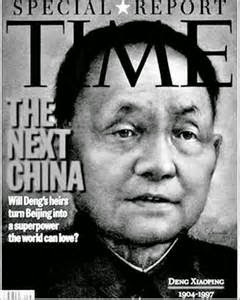
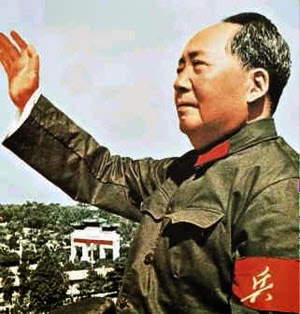
          The French Revolution could be thought of as one example, although in that particular case the violent and irrational forces unleashed by the revolutionaries rebounded on themselves (Robespiere being one of many who suffered this particular fate).  Pol Pot's Cambodia would be another, perhaps even more extreme case. Mao's China a third, although the cultural revolution came some years after the original revolution when Mao could see that his grip on power was waning following the disaster of his economic policy known, somewhat ironically it would seem now, as 'The Great Leap Forward' (perhaps more aptly termed 'The Great Fall Backwards!'). Mao is often called 'The Great Helmsman' in China and that would be true, if you think that a great helmsman is someone who steers his ship onto the rocks! He is often treated almost like a deity, the disaster of his policies ignored in a strangely enduring cult of personality. The man actually responsible for much of the economic and social progress in China today, Deng Xiaoping, is barely ever mentioned.
          Indeed, it was Deng Xiaoping who as leader deemed that there was, after all, nothing wrong with Tai Chi. After years of being fearful to practise their art, people started to emerge into the light once again and Tai Chi once more resumed the cultural role that it had played in China over many hundreds of years. Unfortunately, it was too late for some. The Shifu of the man who practised in the cemetery was apprehended one day soon after and, after a perfunctory trial, sent to a labour camp. He never returned. Now his pupil is a great Shifu in his own right and held in great respect across China. How times change...
          My friend is not only a great devotee of these arts but is, in truth, a very skilful practitioner too. I, for my part, am a mere dilettante as far as these things go. I must admit though, despite its sometimes painfully masochistic quality, there is something very energising about Pai Da. Fifteen minutes of such exercises leaves one literally buzzing with energy in a way that conventional exercise never does. One may be feeling a little tired or jaded at the start but by the time the short session is finished you feel like you could take on the planet! I am not sure that I buy into ideas of Chi as a universal energy source but... I have to admit the affects of the practices. They are very direct and very difficult to ignore. Also, when one sees men in their mid eighties prancing around like teenagers it does tend to give one pause for thought. I am not sure how or why it works, but it is clear that something very significant is triggered by these strange but somehow very effective forms of exercise.
          Back in the café I finish off my second bowl of dou nai by picking it up and sipping directly from the bowl. The longer I am in China the more I seem to be picking up the local habits. It may be a good idea to be a little conscious of this if and when I eventually return to the West, slurping from bowls is generally not 'de rigeur' in those parts. I am also sorely tempted to have another portion of chang fen, a very pleasant and very filling dish that is not dissimilar to lasagne, but without the cheese. At the princely sum of 3.5 Yuan (35p or 50 cents) it is hard to resist but I growing increasingly aware of my ever increasing waistline – it has been doing so steadily  since I arrived in China, despite the amount of exercise I have done. Better to resist for now methinks and leave it for another day.
          The sun is out, it is around 20C and I sit here in shirt sleeves watching the world go by enjoying the last of my drink and another completed blog. Life could be a lot worse...


Saturday, 6 December 2014

Text mad...


          Today my flaneurial duties have drawn me to the luxurious and highly impressive surrounds of a brand new Mall of four floors standing on the edge of the main junction into Chang An. It seems very salubrious and swanky, decorated tastefully with hanging sculptures dangling from the type of roof one that would have made Frank Lloyd Wright proud. Indeed, the whole design of the mall reminds one of the Guggenheim Museum in New York. No doubt this particular architect owes much of his inspiration to the genius of Mr Wright. So close are the features to Wright's design that one could be excused for imagining that the designer in question simply copied the ideas...perish the thought!
          Circumstances dictate a limited choice of watering holes in this monument to commerce, so I find myself taking an Americano and a glass of water in a franchise of a particularly global, tax-dodging American enterprise. Oddly, when I asked for 'yi bai shui' (a cup of water) the waitress proceeded, as per normal, to put ice cubes in the cup, followed, as is usual here, with hot water (the Chinese rarely drink their water cold). Very strange....


          Fortunately, this particular shopping mall seems to be equipped with a very efficient air cleaning system as normally, on this particular junction, one does well if one can refrain from coughing for more than three minutes. I have had the misfortune of having had to wait for buses on several occasions at this particular environmental black-spot. It could not be defined as a pleasant experience.


          Getting to the bus stop in the first place is a life threatening experience in itself involving, as it does, the crossing of eight lanes of traffic. The traffic is 'controlled', and I use the word in the loosest possible sense, by traffic lights. For many drivers the prohibition of the red light seems to be merely optional, for taxi drivers it is like a red rag to a bull. They are more likely to accelerate than slow down in response to such a provocation. Added to this, it would seem that no law at all applies to the bicyclists (many electric powered these days, silent assassins ...) and motorised rickshaw wallahs who quite happily proceed in the opposite direction to the main stream of traffic – quite comical at times... if it wasn't quite so terrifying. This trepidatious pedestrian feels himself in mortal peril each and every time he has the misfortune to have to cross that particular road.
          Inside the café, I sit and chat with a friend whilst observing a group of five youngsters, probably around 15 years of age, sitting around a table together. None of them though is actually talking to another but all are absorbed in the process of texting on their smart phones. This is a very common sight in China and, to be fair, almost everywhere else one goes in the World these days where these devices are readily available and affordable. By the look of things, these youngsters seem to be involved in earnest text conversations with friends not currently present. I often wonder in such circumstances if, when they finally meet up with the friend they are texting, they will then spend that time texting the friends they are currently with!?
          Apparently a whole new form of etiquette has formed around the question of the answering of text messages,  American youngsters in particular being prone to its demands. It seems to receive one and not to respond is considered the height of rudeness. The fear of being accused of such a social faux pas has lead youngsters to going to bed with their phones next to the pillows, ever ready to answer such profound enquiries as 'Are you  still awake?'
          Once more, it seems that the thing we think we own somehow ends up owning us...
          It is a decidedly odd paradox in modern life that seems to occur with alarming regularity: devices described as 'labour saving' or 'time saving' commonly have the opposite effect. Mobile phones were touted as saving us time and the need to be near a static phone – the reality has been that there is now nowhere to escape to if you have such a device (I often leave mine turned off ...).
 The wealthiest societies around the world are equipped with many such 'time saving' devices and yet the more they own the less time people actually seem to have. The opposite is also true, if you look at the 'poorer' societies in the World, the lack of such devices as phones, cars, computers, washing up machines, etc., etc., actually seems to magically leave them with more time. A very curious state of affairs.
          This paradox also applies to town and country. The places where most time saving devices are concentrated, i.e. cities, are at one and the same time the most frenetic and often least pleasant places, where people seem to be in a headlong rush to get ... where exactly?
          I take another sip of coffee and observe one of the youngsters now staring at the screen of his device whilst swishing his thumbs back and forth across the surface as it makes little beeps and whistles. He is strangely absorbed and yet at the same time agitated, gradually getting more and more animated in his reactions, his lips curling into agonised grimaces, limbs occasionally jerking to one side or the other in an attempt to control some process or another. One feels like telling him, if my Mandarin were good enough (which it is not) that he is looking at flashing lights on a tiny screen which is making rather silly little noises ... it really doesn't matter that much. I would guess the reaction would not be a pleasant one!
Wiser to keep my counsel methinks...
          This coffee shop is quietly efficient but could be located anywhere on the planet. Indeed, much the same could be said of the shopping centre itself. A mall, is a mall, is a mall – this one a particularly fine example of the flattening effect of the globalisation. It is clean, anonymous and ... completely without character, other than at the most banal and superficial level.  The idea of 'Globalisation' itself has become one of the sacred cows, much like such erroneous and socially damaging ideas as subjecting every aspect of life to 'market forces'. Its effects have created a world wherein, once one finds oneself in such a mall, one could be anywhere on the planet.
          As someone who considers himself something of a nomad, I tend to treasure the differences between places, peoples and cultures. In this way, it is sad to see the world getting smaller and smaller and less and less diverse. The whole planet appears to be settling into a globalised culture that is increasingly fast but equally, increasingly shallow and terribly anonymising. People reduced to being mere consumers, forever rushing around, whipped into a frenzy by manipulative and ruthless advertising, fearful that they will lose out on the latest 'bargain'. There seems (fortunately, only seems ... ) to be but one game in town, and much like the computer game that is obsessing my fellow customer, it is a pretty superficial and banal game at best.


          My young fellow customer has finally finished swishing away at his screen and now has returned to his texting duties. I have been writing for quite some time now but scarcely have any words have passed between the group of youngsters sitting at the nearby table.
          Ah, the joys of the dizzy social world of modern youth...