Translate

Showing posts with label mao. Show all posts

Friday, 2 March 2018

I want it all...


As I write these words the beast from the east has rendered Norfolk’s weather somewhat more akin to Siberia’s. In the past few days the temperature here has been down to -10 at times and never breached zero. Costas coffee house is a warm haven but a struggle to get to. I managed to unexpectedly assume a horizontal position en route when I slipped on some ice cunningly disguised beneath a layer of pleasantly fluffy snow.
It feels good after four months of global gallivanting to get back to my local cafe again. Costas themselves had rather annoyingly cancelled all their newspapers save the Sun (not sure that particular publication falls under the category of newspaper) before I left, but after receiving a large volume of complaints and becoming aware that people were also voting with their feet, I happily discovered that the Telegraph, the “I” and the Daily Mail have all been reinstated. Happy days...
I read in the ‘I’ that Jeremy Corbyn has just given a speech wherein he reversed his position of four decades of steadfast opposition to the EU to embrace the notion of joining ‘a’ customs union. As ever, the speech in reality is so general as to be meaningless as far as anything practical is concerned, but it does denote the taking up of a position so antithetical to any position he has taken before that one wonders how such blatant hypocrisy can be countenanced even by his most gullible supporters (and there are quite a few of those!). It seems that the reasoning is that although it represents a 180 degree volte face it does have the one benefit of allowing the possibility of the government losing a vote on the customs union in Parliament. In short, it is as blatant a piece of political cynicism as one could imagine. The possibility of power, of an election being called and Jeremy winning it, means that as far as he is concerned it is fine to adopt a position that all his political life he has been firmly opposed to. Power corrupts, and the desire for power can corrupt completely.


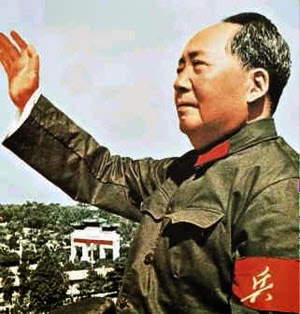
In China, Xi Jingping it seems has decided that a mere 10 years in power may not be sufficient for him. After the disaster of the Mao years when the geriatric leader continued to control China long after he was capable of making sensible decisions. This occurred mainly due to a managed ‘cult of personality’ when his thoughts were made into a kind of gospel in the form of a little red book. His words were incritically read by millions of gullible young red guards (and, interestingly, by John McDonnell....Labour’s shadow chancellor). Mao's final ten years in particular, a period known as the cultural revolution, were so damaging that the very social fabric of China was undermined with many people murdered for even the slightest perceived criticism. Xi Jinping has likewise benefitted the Chinese nation with a volume of his ‘thoughts’ to be incorporated into Communist Party Doctrine and disseminated amongst the general public. Now, apparently, Xi feels that ten years of power may not be enough for him and wishes to remove the legal obstacle of a maximum of two five year terms that the Party put in place at the end of Mao’s reign. Power corrupts, and the desire for power can corrupt absolutely.


Nicolas Maduro, Socialist leader in Venezuela, has called elections to further extend both his riegn and the extent of his powers. After having problems winning the normal elections, despite some blatant rigging, he decided to restrict the influence of the elected National Assembly and instead create a new constituent body only part of which was to be elected. This effectively meant that even if he clearly lost an election he would remain in power thanks to the built in majority from the non-elected parts of the assembly. Neat, eh!? Recently, members of the constituent body voted to put leasers of the opposition on trial for treason.  Power corrupts, and the desire for power can corrupt absolutely.


Another article tells of us of the activities of the leader of North Korea and his father,
Kim Jong Il and Kim Jong Un. Apparently worried that their own people might one day rise up against them, they illegally secured Brazillian passports and obtained visas from whatever embassies they could in Pyongyang in order to have a chance to make good their escapes if it proved necessary. This seems to be a common theme in communist countries, the leaders often live in fear of their populace and hence seek to control them by whatever means neccessary. Hence the CPC in China always being so concerned about ‘social stability’, basically code for the slightest sign of opposition to their rule.

It is a common trait of such folk on the left to seek control. It is often not just power that they want but absolute power, unchallenged and unlimited. With this comes the notion of ensuring that any contrary voice is controlled or silenced. It has been interesting to hear Corbyn’s responses lately when he talks about the press. He has been stung numerous times now by attacks in the press, mainly due to his connection with some very dubious characters in the past, spies, terrorists, antisemites, religious extremists, etc. The compromising nature of much of this information is somewhat inconvenient to a would be prime minister so the revelations have been a source of some irritation to poor Jeremy. His subsequent unspecified threat of “change is coming” sounded somewhat chilling. Asked to give details he would merely say that media bosses were “right to be worried” about the possibility of a Labour government. The threat was couched in language as chilling as the Beast from the East...
In China, the reaction on social media sites such as Wiebo to the notion of removing the two term limit on Xi Jinping was not particularly positive. As ever though with such left wing hierarchies, the authorities didn’t interpret this as a signal that perhaps they should reconsider but merely a sign that such criticism should be blocked, banned, rooted out or circumvented by all means available. Pooh bear, the oft used characterture for Xi Jinping found himself banned once again along with phrases such as ‘two terms’ or ‘extended rule’. Mysteriously, even the letter ‘N’ got banned for several hours!?

Maduro’s reaction in Venezuela to criticism is much of a muchness for a socialist/communist system. The group Human Rights Watch reports “the accumulation of power in the executive branch and the erosion of human rights guarantees have enabled the government to intimidate, censor, and prosecute its critics" and went on to say that that broadcasters may well be censored if they criticize the government.”
Socialism is often sold as the politics of compassion whereas, in reality (as the history shows) nothing could be further from the truth. What it craves is control and power, preferably of the unlimited variety. The common factor in all these cases is that not only do such people as Jeremy Corbyn, Xi Jinping, Nicolas Maduro or Kim Jung Un crave power but that they crave unlimited power. Not for them the unwarranted restrictions of terms, constitutions, elections or even press criticism, that is for wooly liberals and their like. They want it all...and they want it now.
Back in Costas I am finishing off my americano and girding my loins for the trudge back across the common. Hopefully this time I can at least remain vertical for the whole journey. Despite it being incredibly cold in the past few days, the snow lends this part of the World an intense beauty that is really quite unique in its own way. I have missed the place...


Friday, 2 February 2018

No Marx out of ten....


"If anything is certain, it is that I myself am not a Marxist."
Karl Marx


My last week in China, at least for the foreseeable future, and it seems to be an unhappy combination of cold, frequent wet spells and poor air quality. It can be very beautiful here at times, certainly there are many really quite incredible and visually stunning places to visit which can be a wonderful experience if... if the local area is not continuously swathed in a thick and sickly cloud of smog. I was told recently that the city of Zuzhou is an interesting place to see. I spent five days there two years ago and in the whole time was not able to see more than a couple of hundred metres. China could and should be beautiful, but they really need to get their act together as far as pollution goes or fewer and fewer people will want to come (not to mention the effects on the resident population).
I am back in the Cochan today, for the simple reason of the enforcement of the smoking ban in this particular establishment. Tis bad enough that one has to spend every moment of one’s outdoor existence breathing in the smog, not to wish to add to that sad state of affairs by inhaling in the more or less ubiquitous cigarette smoke in the cafes and restaurants here in China.
To be fair, in the five years I have been coming back to China, much progress has been made in many areas. The infrastructure constantly improves, the standard of driving, although awful by any objective standard, is considerably better than when I first came, the generally cleanliness of facilities just keeps getting improving year on year. On pollution though, despite the odd proclamation of intent by the Government, the reality is that it is still as bad as ever, if not worse.
Economically though, it has to be admitted, things are going well. In fact, it would seem evident that they have been going well for something like forty years now. The key event that seems to have allowed this progress to be made was the demise of the much admired Mao Tse Tung and the re-arising of Deng Xiao Ping. With Mao out of the way, Deng was free to turn his back on the truly awful failed economics of Marxism and embrace the dynamism of the free market.
The various Marxist experiments of the Maoists had wreaked huge havoc upon China for nigh on thirty years before Deng took control. True, there was a certain equality but, as some wit put it, though Capitalism may lead to an uneven distribution of wealth, Socialism tends to lead to an even distribution of poverty!


For some strange reason, in a time when dead white men are much decried, especially in the universities of the US and the UK, one dead white man remains sacrosanct. Karl Marx and his political and economic prognostications have arguably been responsible for more death and destruction, more violence and totalitarianism, than any other thought system that the human race has so far produced. Yet, very oddly, he seems to be the one thinker that remains almost immune to criticism, despite the results of his thinking and despite his own, rather sordid personal example (To give just one instance: he routinely cheated on his wife and managed to foster his own illegitimate offspring via coupling with the housemaid on his hapless friend, Friedrich Engels).


Marx’ predictions in relation to the rise of the proletariat invariably proved mistaken. Any revolutions that took place were invariably lead by intellectuals or other members of the bourgeoisie. The historical overhaul of Capitalism never took place (although, of course, history never ends whilst we still have a human race to experience and record it). The free markets, far from collapsing, went on to take over the World.
Also the notion of centralised control of prices and wages has proven to be horrendously flawed, implying as it does the threat of force. It stands in opposition to Adam Smith's ideas about the free market, as expressed in The Wealth Of Nations, where all transactions are essentially a negotiation between a buyer and a seller. If the two do not agree that the price is right for them then they do not transact - in this sense it is an expression of the freedom of choice of the two parties involved and would seem, in that way as least, a far pleasanter way to conduct human affairs and commerce than the coercion inherent within Marxism.


Marx’ racism is also, rather strangely, completely overlooked. For example, he referred to the half Creole husband of his niece as “a gorilla offspring.” Although of rabbinical descent himself, he was also an anti-semite of fearsome proportions. He even wrote a book with the blatant title World without Jews. Some even consider it to be the precedent for another eminent’s anti-semite contribution; ‘Mein Kampf’. (Rather oddly, it has been advanced that Hitler himself may also have had Jewish ancestry). He seems to have considered Asians to have been something of a sub-culture too, being, in his view, incapable of proper development without the assistance of European imperialism. The list goes on and on, but these few examples should suffice.


Marx’s views on slavery in the US also seem rather abhorrent from today’s perspective. A direct quote is perhaps the best way to demonstrate this point: “Without slavery, North America, the most progressive of countries, would be transformed into a patriarchal country. Wipe out North America from the map of the world and you will have anarchy, the complete decay of modern commerce and civilization. Abolish slavery and you will have wiped America off the map of nations.”
All very strange, but really hardly surprising considering just how much Marx managed to get wrong in his analysis and approach to a political and economic philosophy. With some justification, many have criticised Marxism as essentially envy dressed up in fine rhetoric. Although perhaps not completely fair, there is at least some merit to this view. His notion that all property should, essentially, belong to ‘the state’ is perhaps one of the clearest indications of the attitude. Again I quote, this time from the communist manifesto co-authored by Marx in 1844: “The theory of Communism may be summed up in one sentence: Abolish all private property.”
Exactly what gives the Marxist state the right to own the property of private individuals is another matter. When such approaches have been tried, such as in Soviet Russia and Communist China, great suffering ensued in the first stages, transferring property from the capable to the incapable, followed by huge economic mismanagement of the transferred resources in the second, usually leading to mass starvation.


One could go on and on with this stuff, the list of Marxian unpleasantness is long and damning, but the examples I have given up to now should be clear enough. Karl Heinrich Marx was not a pleasant man, either in his political philosophy or in his private life. The attitudes he possessed to women, racial groups, slavery and even people themselves were pretty abhorrent at the time; with the benefit of hindsight (the kind of mayhem that we now know his views lead to) they are even more so.
Tis strange indeed, that such an obnoxious and odious figure should somehow retain a hero’s status to left-wing thinkers who purport to have a strong distaste for racism, misogyny and slavery but, que sera...at times the World will live in does seem to be both mad and, unfortunately, getter madder by the day!
Oh well, twas a nice rant while it lasted. Time to wrap up in scarf and wooly hat and once more brave the endless pollution of the streets of Dongguan. Hopefully, if all goes well, maybe a somewhat less intense rant will follow from the warmer climes of Cambodia next week.


Sunday, 14 December 2014

A Dangerous Exercise ...


Today my flaneurial duties find me gently lapping at a bowl of 'dou nai', which roughly translates to, warm soya milk (with a little added sugar). It is a great favourite in these parts and is often given away free with meals. In this particular café, they charge the exorbitant sum of 1 Yuan (10p or 16 cents) if you take some with your morning meal. I hesitate to say breakfast as it is already 10.30 in the morning;  another late night due to the demands of my friend's addiction to tai chi, demands which sometimes mean that I get dragged into taking exercises of various sorts very late in the evening.      
          My friend is a great devotee of Tai Chi itself whereas I only tend to indulge in some of the more esoteric offshoots such as 'Qigong' (energy work) and 'Pai Da' , a form of exercise therapy that involves slapping various strategic points on the body. The latter I find particularly enjoyable although it does tend to border on the masochistic at times. In the version we practice, one slaps five different locations; the inside of the elbows, the armpits, the groin (carefully!), the backs of the knees and the insteps of the feet. When I say slap, I don't mean a gentle tap but a full-blooded, vigourous slap, the effect of which feels as if the skin is being stung, hard and continuously. This is repeated a large number of times until the blood raises to the surface and the area thus treated has turned quite red. At least, that is the hoped for result. Other colours, in theory at least, indicate an imbalance in the body's energy that will necessitate drawing out with yet more slapping. The exact imbalance is indicated by the precise colour that comes to the surface of the skin.


          Many of these practices, like Tai Chi itself, go back centuries and are deeply rooted in the Chinese psyche. One sees them everywhere in the squares and parks of Chinese cities, sometimes even 'en masse' as hundreds of people will be practising a given sequence together. There are numerous sequences advocated by the various different schools of Tai Chi, passed down partly through the written word but mostly from Shifu (master) to pupil. Some pupils then go on to becomes Shifus themselves and so it goes on down through the years. Some masters even claim direct lines of descent, Shifu to pupil, going back to the origins of Tai Chi itself.
          There was a brief stage though, a decade or so in length, when this sequence was very nearly broken and Tai Chi itself nearly became merely an historical artefact rather than the living, growing cultural phenomenon that it is today. This period was known as the 'Cultural Revolution' and lasted from the mid sixties to the early seventies. Tai Chi was deemed by the advocates of the Cultural Revolution to be reactionary and hence unworthy of being followed by the Chinese populace. Practitioners were persecuted, some even ended up in prison where not a few were unable to survive the extremely harsh conditions imposed by the Chinese penal system of the time.


          The Shifu of the person who teaches my friend is now a venerable old man in his mid eighties, though it is difficult to tell from his upright posture and the smooth and beautifully co-ordinated movements he makes when he goes through a sequence. He lives in a large city in Sichuan province which today is enjoying the benefits of a booming economy and a good standard of living. It was not always thus though. Back in the sixties it was caught up in the storm that was the Cultural Revolution and he himself came very close to being imprisoned for his 'counter-revolutionary' activities.
          He had to promise to not only stop only teaching Tai Chi but to give up personally practising it himself. He found the latter promise impossible to keep though. At this stage of his life he had already been practising for many years and he was aware of the enormous benefits that such continuous practise had bought him. He chose to continue but to be very quiet about it. Sometimes he would practise in the dead of night at home when he thought all his neighbours must be asleep. Sometimes he slunk off in the middle of the night and practised in the local forest or in the cemetery. On one of these sojourns to the graveyard he even came across the man who had been his Shifu beforehand, the tow men practising an exercise known as 'push hands' together.
          The Cultural Revolution was, in one sense, an event unique to China but in another just a repetition of a sequence that has gone on for centuries. The leaders of revolutions, and generally those who seize power through violence, seem to suffer an enormous fear, a paranoia if you will, that that power so taken will be taken away from them, and maybe in a similarly violent way to which they had acquired it in the first place. In reaction to this there is often an attempt to almost start history anew, as if they could re-invent the whole of society in exactly the way they wish it to be, usually with themselves held up as the supreme leader. Even calenders may be reset to year zero (as was the case with French Revolution and with the Khmer Rouge). Perhaps this could be thought of as the ultimate in control-freakery.


          The French Revolution could be thought of as one example, although in that particular case the violent and irrational forces unleashed by the revolutionaries rebounded on themselves (Robespiere being one of many who suffered this particular fate).  Pol Pot's Cambodia would be another, perhaps even more extreme case. Mao's China a third, although the cultural revolution came some years after the original revolution when Mao could see that his grip on power was waning following the disaster of his economic policy known, somewhat ironically it would seem now, as 'The Great Leap Forward' (perhaps more aptly termed 'The Great Fall Backwards!'). Mao is often called 'The Great Helmsman' in China and that would be true, if you think that a great helmsman is someone who steers his ship onto the rocks! He is often treated almost like a deity, the disaster of his policies ignored in a strangely enduring cult of personality. The man actually responsible for much of the economic and social progress in China today, Deng Xiaoping, is barely ever mentioned.
          Indeed, it was Deng Xiaoping who as leader deemed that there was, after all, nothing wrong with Tai Chi. After years of being fearful to practise their art, people started to emerge into the light once again and Tai Chi once more resumed the cultural role that it had played in China over many hundreds of years. Unfortunately, it was too late for some. The Shifu of the man who practised in the cemetery was apprehended one day soon after and, after a perfunctory trial, sent to a labour camp. He never returned. Now his pupil is a great Shifu in his own right and held in great respect across China. How times change...
          My friend is not only a great devotee of these arts but is, in truth, a very skilful practitioner too. I, for my part, am a mere dilettante as far as these things go. I must admit though, despite its sometimes painfully masochistic quality, there is something very energising about Pai Da. Fifteen minutes of such exercises leaves one literally buzzing with energy in a way that conventional exercise never does. One may be feeling a little tired or jaded at the start but by the time the short session is finished you feel like you could take on the planet! I am not sure that I buy into ideas of Chi as a universal energy source but... I have to admit the affects of the practices. They are very direct and very difficult to ignore. Also, when one sees men in their mid eighties prancing around like teenagers it does tend to give one pause for thought. I am not sure how or why it works, but it is clear that something very significant is triggered by these strange but somehow very effective forms of exercise.
          Back in the café I finish off my second bowl of dou nai by picking it up and sipping directly from the bowl. The longer I am in China the more I seem to be picking up the local habits. It may be a good idea to be a little conscious of this if and when I eventually return to the West, slurping from bowls is generally not 'de rigeur' in those parts. I am also sorely tempted to have another portion of chang fen, a very pleasant and very filling dish that is not dissimilar to lasagne, but without the cheese. At the princely sum of 3.5 Yuan (35p or 50 cents) it is hard to resist but I growing increasingly aware of my ever increasing waistline – it has been doing so steadily  since I arrived in China, despite the amount of exercise I have done. Better to resist for now methinks and leave it for another day.
          The sun is out, it is around 20C and I sit here in shirt sleeves watching the world go by enjoying the last of my drink and another completed blog. Life could be a lot worse...