Translate

Showing posts with label communist. Show all posts

Monday, 30 April 2018

Eastern Approaches...


This week I find myself in the cosy confines of the local Conservative club in Thetford town centre. Like most such places, it is not really political in any sense that most would understand as political, and certainly the clientèle are a very mixed bunch indeed, seemingly of all affiliations and persuasions. What is very pleasant is that the place is cosy and rather warm. Outside it is the last day of April and the temperature is 4C with a wind chill factor that makes it feel more like zero. Also, they do a decent cup of coffee for a very generous £1.05.
As it has been a few weeks since my last flaneurial blog I felt it was time that I actually sat in front of the oddly intimidating keyboard once more and created something of a counterbalance to my observations of life in the US. Many, many moons ago now, when I was a relatively young and carefree flaneur, I also had the good fortune to visit several countries behind what used to be known as the Iron Curtain. The first taste of life on the other side was Bulgaria; it proved pleasant enough but the realisation that although myself and my travelling companion readily acquired large amounts of the local currency, those Lev were incredible difficult to actually get rid of. Beyond a few random leather goods there was literally nothing of any value or interest to purchase. The best that could be said of the shops was that they were functional...just. In the city of Varna on the Black Sea there seemed to be little or nothing occurring whatsoever.
Before we left for Bulgaria we were assured by the Bulgarian tourist agency that we could enjoy a rate of exchange 1.5 times the norm. This we naturally took advantage of, only to find on arrival
in the country that locals were prepared to give 4 or even 6 times the rate on the street. Interestingly, the most active of those engaged in such unofficial bureau de change activities wore the blue of the local police force. That was an early lesson in the joys of Socialist societies.
A couple of years later I actually found myself on a tour of the Soviet Union itself. I believe Cernenko was in power at the time, one of a series of leaders so old that no sooner had they assumed the reigns of the Supreme Soviet than they promptly dropped dead. In some ways it was symbolic of the system itself; even to my inexperienced eye it was clear that it was dying on its feet.
The first city we visited was Moscow. By this stage of my life I already had a fair amount of travelling experience and had been to about 25 capital cities previously. Moscow was far and away the most boring, lifeless and oppressive place I had ever been to in my life. Dour, cowered people, shortages almost everywhere and a general feeling of alienation, a society ill at ease with itself.
I had been told to visit GUM, Moscow's equivalent to Harrods according to our guide. On arriving there I found a dingy three storey building just off of Red Square. The goods were incredibly shoddy, but when a shipment of shoes arrived at one of the departments people were almost fighting each other to get in first. Looking at said shoes I found them to be of poor quality and style, little more than utilitarian at best.

Red Square proved a little challenging in its own right. Down the centre there were lines marked on the road that indicated where the official cars could drive into the Kremlin. It had a small zebra crossing about 80 metres from the gate. As there were no cars in sight, just tourists milling around, I started to cross over the painted lines only to be greeted with the sound of a shrill whistle. I looked around and saw a policeman in a rather impressive fur hat blowing furiously in my direction. I gestured to him indicating that there was nothing to be concerned about, not a vehicle anywhere to be seen, but his response was to put his hand upon his gun holster and indicate that I was only to cross at the designated crossing. As the days went by in Russia, I was to discover this strict adherence to such petty rules was all part of the apparatus in the Soviet Union of the time.
A few days later we flew down to Tbilisi in Georgia in an ancient Tupolev tu-154. From a height of 35,000 feet we looked down on an endless expanse of wheat as far as the eye could see on both sides of the aircraft. Oddly though, very few roads were visible. I had read before heading out on the trip that yet again that year the USSR had been forced to buy huge amounts of wheat from the US because of a shortage at home. I could not help but wonder exactly what kind of economic system could so badly mismanage its obvious and plentiful resources.
After about an hour I felt the call of nature. Looking back down the aircraft I noticed that the toilets at the rear were already occupied so I headed towards the front of the plane. About three quarters of the way along the cabin was split by a red velvet curtain. Pulling this back I was quite surprised to see several rows of very large and cosy seats, a well-stuffed magazine rack, tinkling drinks trolley and four or five flunkies. Quickly, our courier jumped up and snatched the curtain from my hand. Surprised, I asked her the obvious question:
I thought there was no first class on Russia planes?”
She responded:
It's not first class, it's for party members!”
Kinda said it all really...

The city of Tbilisi in Georgia was, at the time, part of an early experiment that the Soviet government were running in allowing the local farmers and manufacturers to simply sell their produce and goods without government interference. The experiment had been going for about a year but the effect was like chalk and cheese in comparison to Moscow. Fresh and healthy produce in abundance everywhere and a wonderfully vibrant atmosphere to the city in complete contrast to the utter deadness of Moscow.
Up to that stage of my life I had been very much a man of the left. As a child I had admired the likes of Che Guevera and Fidel Castro, and loved all things to do with the old USSR. My father had been a strong union man and that attitude had very much affected me as a boy. Now though, seeing the reality of life in the Soviet Union, the cold hand of centralised control, the repressive regime, the general dowdiness of everything from the flats to the clothes, the poorly designed cars and austere metro sans advertising except for the glories of the Communist Party, it was slowly beginning to dawn on me just how awful applied Socialism actually was in practice.
I went from the joys of Tbilisi, with its limited market reforms, back into Russia at Sochi. The location was pleasant enough but it became very noticeable that those of us who dared to venture out on our own had company whether we liked it or not. Often that company was 50 yards or so away but you couldn't help but notice the same faces kept turning up again and again. My courier was almost pleading with me at one stage to stay with the group. At a guess, she herself was probably under some pressure for losing control of her Western charges.
The trip ended in Leningrad (renamed St Petersburg once again now). Although a much more beautiful city than Moscow, with some gorgeous architecture, it still suffered from the same paranoia. I had spent a few weeks learning some basic Russian before I left but found that people were very unwilling to be seen spending any time at all with any of the group. Eventually, in a café cum bar in central Leningrad, I did manage a short conversation with a somewhat drunk middle aged man. He confirmed what had been my suspicion. Just being seen with the likes of a Western tourist could mean trouble for you or your family, so the wise thing was to look the other way and pretend that you had heard and seen nothing.

Hmm, this piece seems to be running on a lot longer than intended, yet it feels as if I have left so much of these experiences out. Suffice it to say that within those few weeks in the old Soviet Union the first seeds of doubt were sown. I had started the trip really quite naive about the nature of such collective systems. When I set out it had seemed clear to a young and idealistic traveller where the political future should lie. In that sense it was something of a coming of age, of the realisation that all was not right in the Socialist garden. At the time I had no idea why; the answer to that was to take another two decades, but the first inklings of the underlying reality were beginning to be realised.
Back in the Conservative club life goes on much as it ever did, that comfortable continuity that seems so complacent yet is the very glue that holds a society together. We all imagine as youngsters, much as I did, that what is needed is the bold, the new, the iconoclastic, but the reality is that much of what makes a tolerable society is in the institutions, habits and attitudes of a people. Those deep cultural roots that make Europe and its culture such a beacon to the World. The historian Michael Woods put it beautifully when he spoke of 'The habit of civilisation'.


Friday, 16 February 2018

Brother No. 2 ...


'Those who do not learn history are doomed to repeat it.'
George Santayana

Another day in the pleasant and surprisingly cosmopolitan Siem Reap, another visit to the Helen Guesthouse and Cafe. It is a few blocks from where I am staying but worth the trip for the generous continental breakfast served there. I have made this something of a habit over the last week and have much enjoyed both the food and the pleasant ambience of the place. So far, this reflects my experience of Cambodia and Cambodians in general; they seem invariably polite, gentle and friendly. So strange that here, of all places, such an awful catastrophe took place not forty years ago.
My original intention in coming to this place was to enjoy several days surveying the massively impressive Angkor Wat, but in practice I have become more and more fascinated with the nature of the tragedy that took place in this land in the 1970s than the more ancient history of the Angkor civilization. The obvious thought, given the nature of the people, is that if such a thing can happen here it can happen essentially anywhere. Mankind can be cruel and violent, but the extremes that they will go to in the name of an ideal, in this case Marxism, are truly shocking. Any individual is capable of some very dark acts, but genocide on this scale needs organisation and a rationale, at least of sorts.
Strangely, many of those who perpetrated these crimes escaped punishment for years. Most actually died before having to face any kind of court. Perhaps the most famous besides Pol Pot himself, the notorious Nuon Chea, otherwise known as Brother No. 2, was only recently convicted (in 2014) for his crimes against humanity. He is still alive today, having been given a life sentence at the end of the trial. I personally have always been against capital punishment, but such people as Nuon Chea make me question my own judgement on the matter.

Until near the very end of his trial he was both in denial about his guilt and seemingly unrepentant, saying that the actions he took were for the good of his country. Watching videos of the man giving interviews in the years before the trial, one gets the impression of someone who, even now, feels the ends justified the means. One question dealt with the killing of innocent people, which clearly happened countless times during the reign of the Khmer Rouge, and his response seemed to imply that it was OK to kill any number of people who may be innocent as long as you were sure to eliminate a possible threat amongst them.

Chea denied his links to actual killings until evidence emerged of his very direct involvement with the infamous S21 prison in the outskirts of Phnom Penh. The building formerly known as Tuol Svay Pray High School was co-opted by the Khmer Rouge in 1975 and became a centre for the interrogation, torture  and elimination of those who the Khmer Rouge considered to be a threat. As the chaos of their economic mismanagement became more and more apparent (unbelievably, they actually chose to follow Mao’s model from ‘The Great Leap Forward’ - something that had already lead to millions of deaths and mass starvation), they looked for the explanation in paranoid fantasies about saboteurs, agents of the KGB and CIA and, finally, defectors from within the ranks of the Khmer Rouge itself.
There were, alas, painfully few eye witness accounts to go on. Of the thousands of people who were sent to S21 only a handful survived (7 out of 12,000 according to one estimate). Oft times, people were picked up on the flimsiest of suspicions. These people were then tortured and interrogated. Reading a transcript from a survivor, the interrogation seemed to consist of the interrogator making an accusation that the bemused and confused prisoner was a spy working for the CIA or the KGB and being tortured in the most crude way until he not only confessed but also named everyone he knew as co-conspirators in the plot. These people were then picked up and the same process repeated.

It didn’t matter to the Khmer Rouge if those named were children, they still tortured and murdered them much the same as anyone else. The images that survive of frightened and confused kids taken before their execution are harrowing to this day. Even the babies of accused mother’s were summarily executed. The extent and depth of evil perpetrated under the Marxist Khmer Rouge and their banal ideology is hard to believe.


When one hears the likes of Pol Pot or Nuon Chea elucidating their ideology one is struck by its similarities not only to the communism of Mao Tse Tung that had brought such calamity to China but also to the National Socialism of Adolf Hitler. There was a large element of racism added to the underlying communism and this proved a particularly toxic mix. They hated the Chinese, the Vietnamese, the native Cham muslims and basically, any foreigner or foreign influence. An odd corrolary to this is that Brother No.2 himself was actually at least a quarter Chinese. This is strikingly similar to the oft stated possibility that Hitler himself was part Jewish.
For such stark and ongoing evil to exist it really seems to take an idealist, one that believes that the utopian ends justifies the inhumane means. National Socialist Hitler dreamed of a Reich that would last a thousand years, Mao Tse Tung and Lenin thought they were guiding their countries down the road to a not too distant Marixist utopia, Pol Pot and Nuon Chea dreamed of an agrarian communist Cambodia free of outside influence. They all were responsible for some of the worst genocides experienced by man in the whole of human history. The lesson is to beware of the true believers, the idealists, those convinced of the desirability of their dream and perhaps particularly those who wish to shape society to what they feel it should be. All such systems involve coercion and force eventually, no matter how ‘good’ the leaders seem to appear beforehand, how righteous, how filled with passion to impove society.
They are the really dangerous ones.

Back at Helen’s the day has become a lot warmer now as I sit here contemplating just how terrible such people can be. If we are honest, I think we all have to acknowledge that each of us is capable of doing terrible things. Individuals do commit such acts all the time, but for evil on a such a vast scale as that produced in Cambodia, in China, in Russia and in Germany it takes a state and usually a state with an idealistic vision of how society, and the people within that society, should be.
Usually, when I write these blogs I do so with a certain amount of pleasure. The process of sitting in a cafe contemplating, researching and writing is almost always a pleasant one. With this particular blog the feeling is a whole lot more negative. There was much I didn’t include as the details are just too awful, too unpleasant, even too shocking to want to expose my readers to. At the end of the process I just felt angry, angry for what had happened, angry that people still advocate similar systems, angry that the whole thing could happen again.
One final thought that struck me: given the history of communism and the number of times it has lead to such abject behaviour and awful atrocities, one would have thought that by now the symbol of the hammer and sickle should be held in the same low regard as the swastika - it is hard to see why we should differentiate between these two totalitarian and violent systems given their very similar results.
Enough now, time to go out into the sunshine once more and forget, just for the time being at least, that there are still people gullible enough to want to repeat such historical mistakes and who thereby risk repeating the same mistakes in the future.

Heaven protect us from idealists!


Friday, 23 January 2015

Broken China...


As I start this blog entry, I find myself sitting in the rather impressive Shenzhen Bao'an airport terminal 3, a wonderfully modern, state-of-the-art construction, designed by the somewhat unfortunately named Massimiliano Fuksas. It is the kind of architecture that modern China has fallen in love with, or at least those responsible for the pubic purse. One finds examples of these structures everywhere in modern China these days. The railway stations in the medium to large cities for example, often so dully normal in many countries, are on a scale that is scarcely believable in the PRC. Like modern cathedrals, the interiors bedecked with shining white marble, one cannot help but wonder at the cost of such constructions.

Arriving in Hangzhou last year, I recall wanting to buy an onward ticket and being directed to the ticket office at the other end of the inner concourse. The walk, through a vast echoing hall of gleaming stone, the subject of more or less continuous care from a vast army of cleaners, took a full ten minutes. It feels more like catching a plane than taking the train when using such places, the stations more akin to airport terminals than anything we would normally think of as a railway station. Many of the processes are the same. One's luggage is run through scanning machines in much the same manner, passports or I.D. papers have to be shown, and one is not allowed onto the platform itself until the train number has been announced when one proceeds to the appropriate departure gate.

It is all very impressive, the contrast all the greater though after starting the journey from the back alleys of Chang An where rubbish was piled high and left for days, stinking and rotting, the home to an army of cockroaches and rats. Personally, I was somewhat averse to the sight and the smell, but one would regularly see elderly people, their trailered bikes piled high with all sorts of flotsam and jetsam, scrabbling through the mounds of detritus looking for anything of any value whatsoever. This even went as far tearing open packets of discarded foodstuffs, trying to retrieve the small amounts of content that remained after being thrown away, often just a few grams of powder.

One of the justification that the Chinese government trots out, when asked to justify their truly awful CO2 emissions to climate change conferences, is that China is 'a developing country' and hence should be allowed more leeway than the 'developed' countries of the West. China alone is actually responsible for a quarter of the entire planets emissions and yet they manage, year in and year out, to avoid any restrictions whatsoever on their polluting activities by trotting out this excuse.

China is not an under-developed country in any sense that the phrase was originally meant to convey. The infrastructure would, for the most part, be the envy of most countries around the World. Development goes on at a pace that is truly stunning. New projects are constantly being commissioned by local and national government on a truly herculean scale. Money seems to be everlastingly available for such schemes. They seem to represent an expression of national or local pride, a kind of civic vanity for many local authorities to make the very best possible impression on visitors to their cities. Town halls in China in particular, can be seen as very clear examples of this civic vanity. They are often vast megalithic constructions, or examples of the very latest in architectural trends, that cost untold millions. 

No, China is not an undeveloped nation in the normal sense. On many levels it is vastly rich with sums of money owed to it that are truly staggering (the US debt alone is far more than most economies are worth). What they do have is a wealth distribution problem. The contrast between the wealthy, often an odd admixture of people in China between entrepreneurs, business owners and civic officials with sufficiently influential positions to make their patronage worthwhile, and the poor is often extreme.

It is indeed quite strange to reflect that for a so-called 'communist' country their wealth distribution is actually somewhat worse than either the UK or the US. Indeed, it is odd to think that in the former of those two countries, theoretically a capitalist Western country, there is far more state sponsored help for individuals (hospitals, pensions, welfare, education, etc.) than in the, theoretically at least, communist country of China. The money is there in the latter case but... they would rather spend it on endless vanity projects and suchlike than use it to assist alleviating the load on the poor or providing facilities to the population.

There is a strange factor at work here, or at least strange to someone such as myself coming form a Western perspective. There is a really quite bewildering callousness at times built into the culture. It is not that it is a mean culture or anything of that ilk, in many ways and in many situations, it is actually quite generous. Once one is accepted within a given group then the generosity becomes almost embarrassing at times. On several occasions during this trip, I almost had to fight in order to pay a restaurant bill. People who had treated you previously already would scarcely allow you to reciprocate, assuring you that as their guest they would be happy to pay. It can almost reach comic proportions at times, with several male members of a given group theatrically almost coming to blows for the right to pay the bill.

The downside of this, and where the callousness comes in, is that the generosity tends to extend only to those within the group. Outsiders, be they outside the family, outside the business, outside the locality, anyone who is not considered part of a given group, do not enter into the calculation whatsoever. Often, they are not even extended the most basic of civilities or consideration. There is an oft-used expression in the West: charity begins at home. For many Chinese, this is a fundamental assertion.

The philosopher Confucius gifted the Chinese people with the notion, indeed the fundamental importance, of the beneficial nature of social harmony and relationsips. In day to day practice, this has evolved into the concept of 'guanxi'. Guanxi is expressed in China through interwoven networks of relationships. Here it is the classic case of not what you know but who you know that really matters. The individual is considered to be of little importance within this system. What matters are the networks of relationships that he is part of.

All can be decided by guanxi: education, job, social circle, social status. Those in authority frequently owe their position not to any particular skill or abilities but simply to the relationships they have build up, familial or otherwise, that will allow them access to such roles. If you have few connections, or those connections are not sufficiently powerful or influential, your career choices are likely to be extremely limited within this society.
As ever with these things, one's view of such practices depend how one frames them in one's mind. You could say that it is, of course, necessary to build networks, and relationships are important in almost any situation in life. On the other hand, one could look at guanxi as more or less an inbuilt culture of massive corruption that effects almost everything that occurs in China today. It is all-pervasive and everywhere in the culture, so omnipresent that it is scarcely even realised by those within the system. It simply is the way that lives are lived here.

Within this context, anti-corruption drives, such as the currently professed policy of Xi Jinping's government, are unlikely to meet with any sustained success in the long term. In practice, the hidden purpose of such policies in China has often been to 'purge' political opponents; a way of asserting the leader's grip on the party apparatus. This may or may not be the case with the current example; for the moment, it is too early to say. If it is a genuine attempt to root out corruption then it is a massive task indeed. One can only wish them well in such a venture.


Back in the departure lounge, my flight has just been called. Within a few minutes I should be leaving China and heading South to the sunnier climes of Thailand. In many ways I will miss the place. Each occasion I come here I enjoy it but, at one and the same time, I also find it maddeningly frustrating. One cannot help but be elated by the sheer magnificence of buildings such as this terminal, it is architecture on the grand scale. On the other hand, one cannot but help but be depressed by the sheer abject nature of the poverty one sees here. Magnificent and abject, generous and callous, so much opulence and yet so much squalor; the China of today is a land of great contrasts.

Some people love it, others loathe it. After another two months here, I am still not sure which of these groups I owe my allegiance to...


Monday, 22 December 2014

Baby Booming


On a beautifully sunny, even if somewhat breezy, morning in mid-December my nomadic and flaneurial duties have led me to spend some very pleasant time in a branch of Taste Zone, a newly created but very comfortable chain of restaurants in Southern China. This particular outlet has only been open for a few weeks in the town of Chang An (which, as I discovered recently, roughly translates to 'Everlasting Peace') but I have found myself frequenting it on several occasions now. The restaurant /café has rather deep and sumptuous chairs, a relatively good internet connection and a seductively tempting range of breakfast delights at outrageously reasonable prices. Added to this, they allow endless refills of coffee or dou nai (a soya bean based drink), whichever refreshing beverage happens to be more to the customer's tastes. This particular nomadic flaneur feels that he could scarcely wish for more!
          This has become a preferred place for writing as the nearby Cafe de Coral seems to attract a few too many mums who sometimes pop in for a cheap and cheerful breakfast before taking their offspring off to the nearby school. The children are almost invariably well behaved but very energetic, something that I have found throughout my travels in China. Oft times, even the youngest of them seem to enjoy attempting to practice their few words of English on me. Usually this consists of 'Hello' and 'How are you?” followed by a look of total incomprehension when I reply. After that, the normal reaction seems to be to break out in fits of giggles before running back to their smiling mothers.


          This is one feature of Chinese life that is very clear: they love and cherish their children. This may be because of the one child policy followed here, or maybe simply because of the underlying Confucian culture which puts great emphasis on the value of family and relationship. As is usual with so many of these things, the reality probably lies somewhere between the two. The culture values children anyway but the realisation that a family may only ever have one or two children puts even greater value on the children themselves.
          Babies in particular are valued to an extent that is almost fetishistic by European or American standards. Chang An itself has whole streets that seem to be mainly dedicated to baby shops. Whereas the larger main streets of Western cities may have one or, in very exceptional cases, two such outlets, here in China you may see three or four such shops within just a few metres of each other, each apparently doing a roaring trade.


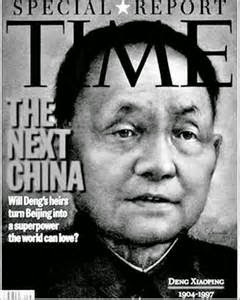
          The one child policy has been much criticised, particularly by those in the West who feel it is a great imposition on personal freedom. To be fair to China though, they are perhaps the only country in the World that has reacted meaningfully to the ominous and looming problems of overpopulation that we all face. At the time it was imposed, once again mainly due to the insight of that most far-sighted and shrewd of politicians, Deng Xiaoping, China's population has already reached a billion. Twenty five years later the population seems to be peaking at around 1.4 billion and to be achieving the levels of stability that were first envisioned all those years ago. It is believed that without Deng's measures there would now have been something like three hundred million additional citizens living in the People's Republic.


          In contrast to this, India's politicians have singularly failed to even address the issue and their population has nearly doubled over the same period of time. If projections are to be believed, India will surpass China as the World's most populace country within the next few years. Given the relative sizes of the two countries, one feels that a sorry fate awaits the Indian sub-continent.
          An interesting graph to look at is that of the planet's population over the last two thousand years. It is remarkably steady at around half a billion all the way up to the industrial revolution. After that it begins to take off, the line of the graph growing ever steeper and steeper as we move into the 21st century. At the time of writing, the World's population presently exceeds seven billion. Clearly, if the numbers go on increasing at such a rate (and it is hard to see how that could be avoided) we will reach unsustainable levels in the not very distant future.


          Given that, great credit must go to China in this. Most of the brighter folk around the World seem all too well aware of the imminent threat of global warming, even if those given to consuming their information from less reliable sources will be forever in denial. With regards to the population problem though, there is an almost deafening silence.
          China is still a very overcrowded country but they do seem to have a grip on the problem now. Socially the restrictions of the one child policy are likely to have many unforeseen effects but, in the short term at least, one cannot help but be impressed by the individual attitudes of the parents to their children and by the children themselves. They seem to intuit, even the youngest of them, that they are loved, that they are appreciated, that they are cherished. Like children everywhere, the youngest will still throw the occasional tantrum, tears will occasionally flow, but here such unhappiness seems to be short lived and the child will quickly be comforted by their parents, safe and secure in the knowledge that they are wanted, that they are loved. The smiles soon return.
          Back in the café, two hours have passed very pleasantly, apart from the slightly annoying repetitive playing of Christmas carols; I had fervently hoped that I had escaped that particular fate when I left the West in November. Oh well, at least it is not John Lennon, Kirsty McColl and the like; I guess I should be grateful for such small mercies. I consume yet another cup of dou nai, a little too sweet for my tastes but the Chinese seem to like their drinks so.  The sun is shining brightly outside and the day is wearing on. Time to leave now methinks; pleasant as this place is, there is much to do today and I think I may have indulged in the seductive pleasures of blogging a tad too  much for one day already.