Translate

Saturday, 7 November 2015

Give Us A Twirl


On another hot and steamy day in Dongguan, I find myself sitting in the spacious confines of the city's magnificent library. I use the word 'magnificent' advisedly, it truly is a wonder and there is nothing we have in Europe that compares to it as a public amenity. It also has the distinct advantage of being air conditioned which, in such a hot and sticky atmosphere as Dongguan possesses, is a distinct plus point. I am also feeling rather replete, having dined at a local Buddhist restaurant where they lay on the most generous spread each lunchtime. An entirely vegetarian affair, they often include grapes, bananas and/or pears to round off the already generous offerings. Today there is a choice of some 16 dishes, 5 soups and a range of dangao (cakes) and fried fancies. One can return to the trough as often as one desires – all for the princely sum of 15 yuan (approx. £1.50 or $2).


I have used this particular restaurant on several occasions since arriving in South China, the range and freshness of the food on offer being hard to resist, especially at such a reasonable price. The only problem has been that, as so often in my existence on this earth, I am struggling with an inability to resist temptation. On arrival in these parts, I was a sprightly and fit 101 kgs which, for my rather large frame, is not at all bad. Now, after only two weeks of regular indulgence, my weight has climbed to a rather portly 107 kgs. I even gave up the distinctly refreshing and unbelievably cheap (45p UK, 60 cents US) bottle of Tsingtao that I would imbibe at the end of each long day of diligently observing my flanneurial duties. Unfortunately, foregoing the pleasure of downing a cool beer at the end of the day seems to have had no measurable effect on the situation.

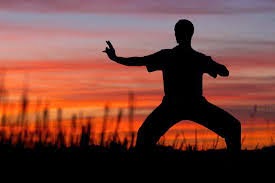
I have also been tempted into doing some exercise. In these conditions, walking two or three miles is normally enough, but it now seems necessary to supplement my flanneurial jaunts with some extra-mural calisthenics. So it was that when I came across a gentleman in the local square swinging nunchaku to and fro I became quite interested in learning this particular martial art myself. My companion here, a master at Tai Chi, was equally fascinated. Originally the intention was a few stretches and a round or two of qigong, but seeing this highly-skilled gentleman twirling the nunchaku with such dexterity aroused more than a little curiousity in us both.


Nunchuku (sometimes known as 'nunchucks' in the West) consist of two metal bars, each about 12 inches in length, connected by a sturdy piece of chain that is approximately 5 inches in length. Apparently, they were originally developed as a weapon from a wooden flail whose original purpose had been to pound rice in historic Okinawa. At the time, the Japanese had invaded the island and banned the possession of all weapons. The locals responded by teaching themselves karate skills and develop the use of such implements as staves and scythes as a means of defence.

The gentleman in the square who gyrated the nunchaku so skillfully turned out to be a Mr. Chen, a Shaolin trained master-artist who hailed from a small village in the Shandong district, just south of Beijing.  Apparently, his village has something of a tradition of training and teaching martial arts so, for Mr. Chen at least, this sort of thing runs in the family. This is by no means untypical of China, where certain areas will have certain specialisations, and even certain families be known for their expertise in certain fields. In Tai Chi in particular, it all gets a little too competitive, and perhaps just a bit silly, as each of the famous families involved tends to claim the right to the true lineage of Tai Chi (and, of course, the right to train the devotees at ever increasingly large fees).


 The idea appears to me that skills are passed down through the family line, usually from father to first born son. Though one imagines that genetics would have some bearing on the level of skill likely to be possessed, this sort of extreme attitude to the role of birth is hard to swallow. Although it often happens that a famous sportsman's son will follow him into that sport, rarely does that son display the same level of skill as his pater. There are exceptions of course, but the exceptions are so few that they rather lend support to the view that such extreme 'geneticism' cannot be based on anything more than belief.
The whole situation can become a very touchy subject, with each faction believing that they have the sole rights to the teaching of the given skill – and the right to denigrate the other families who are possessed by a contrary opinion.
Mr Chen, fortunately, seemed pleasantly free of such concerns, but his love for his art shines through his teaching and his attitude to his students. Mostly, he carries a demeanor of calm and patience – he scarcely ever raises his voice. When he does, just a few short, sharp words are enough to reassert the required discipline needed once again. He has clearly taught a range of fighting skills for many years now, as many photographs of him tutoring would-be martial artists of many nationalities demonstrate. My own desires in this area are far more modest; I simply wanted to learn how to use the nunchaku, hopefully without injuring myself in the process.
 Easier said than done! After a week now of twirling these bars  I have now successfully managed to hit my fingers more times than I care to remember, my elbows all too often and even managed to give myself quite a painful blow to the cranium on one occasion. My arms bear witness to my own ineptitude, with several bruises coming up nicely now. Still, there is something fascinating in the whole pursuit, something about the desire to get to grips with a very challenging skill, something in the feeling one gets when one actually does manage to manipulate the nunchaku skillfully. When it is going well, there is a certain sense of togetherness, of focus, of flow. It is a sense I have known in several other fields in the past, and each time I come across the state I enjoy it immensely.
There is also something rather lovely in that relaxed yet focus state which comes upon you as you practice well. Often, with me at least, it takes about 15 minutes of decreasing clumsiness before I get near that state. Each time I start at the moment, it feels like the first time all over again, but…. gradually, those periods of ineptitude are getting shorter and the feelings of competence becoming more and more sustained.
Mr. Chen looks upon my efforts with quiet and friendly eyes. He has seen it all before – the clumsiness, the incompetence, the frustration, but he knows that if one quietly perseveres the skills will come along in their own time. At first, I would curse under my breath or even, as few hear know when I am happily blaspheming, swear out loud. But gradually, session by session, I am learning to let go of that frustrating and simply pick the nunchaku up each time they clatter noisily to the ground and start all over again.
Weighing myself this morning, I still turn the scales at around 107 kg but … whether I lose weight or not exercising in such a way, I found myself both enjoying the learning of a new skill and, perhaps more importantly, re-learning the benefits of patience with one's own shortcomings.
Tucked away now in a quiet corner of the foreign books section of Dongguan library, I find myself smiling at the prospect of enjoying another session with my 'shifu' (master) later this evening. The gentleman in question is but few years older than me, but he is vastly more experienced in these areas. Martial arts here in China are, naturally, about fighting skills but, more than that, they are also a vehicle for one to learn about oneself, one's limitations and, ultimately, one's possibilities.  Beneath the combative exterior, there are layers upon layers of beliefs, philosophies and concepts.


Such notions deserves a little more attention than I have the time or the inclination to give today. It is an area, though, that I may well revisit in coming blogs. For now though, I must be on my way. Hopefully, barring too many blows to the head from fast moving sets of nunchaku, I will be in a position to continue my flanneurial activities next week.
Until then … Zaijian!


Thursday, 29 October 2015

Built to last,but not for long

Built to last, but not for long....


On a very steamy day in central Dongguan, I have managed to locate a very comfortable, air-conditioned, little drinks and cake outlet that goes by the delightful name of Green Tea Cake (as ever, the Chinese omit the definite article). 
A Chinese crooner is groaning away softly from the speakers, clearly in some pain over a long lost lover, or something of similar ilk - one needs little understanding of the words, the sentiments are the same the whole World over. 
Opposite the cafe, a building that consists almost entirely of the utilitarian white tiles that were so ubiquitous in this country twenty or so years ago, sits softly crumbling, losing more tiles each month, while it awaits its turn for its own, all too inevitable, demolition.  
China seems to be in a constant state of renewing itself, replacing the relatively 'old' with sparkling new edifices as part of a seemingly continuous process. Unfortunately, although the new edifices may sparkle they tend to do so for but a few years. The endless building and rebuilding of flats is a fine example of the process. The flats look like the last word in luxury when they are constructed, but a return visit only a couple of years later gives a completely different impression; one of rising damp, leaky pipes and crumbling tile work. 


On the plus side, this impermanence means constant work for those involved in all things related to construction. On the downside, one wonders at the wisdom of investing in property that has such built in obsolescence!? 
Economically, this permanent state of impermanence entails a constant state of turnover. This means that there is forever an ongoing state of intense economic activity as the money spins around again and again in these ever renewable projects. The period between building and obsolescence seems to be becoming shorter and shorter. Even buildings that are less than a single decade old can be quickly consigned to history in the headlong rush into the brighter, more modern, future.  
In a sense, it feels all very Buddhist; almost a celebration of impermanence. It can also feel a tad disconcerting though, as one succumbs to the feeling that one never really knows a city in China. Go back to the same city just a few years later and so much will have changed as to render it nearly unrecognisable. 
          

It seems that most things are built to last but a short time here in China. Visiting sites that, just a couple of years back, were the last word in modernity, but are now left forlorn and abandoned leaves one feeling somewhat disconcerted at the temporality of it all.           
I read on the BBC site last week that the UK government, in its wisdom, has decided to allow the Chinese to build two atomic power stations, one on the East coast and one on the West. Given the general standards of construction here in China, one cannot help but ponder on to the sagacity of such a move. 


In the week that I left the UK, the self-same British government were casting doubts on the new leader of the British Labour Party, one Jeremy Corbyn. They felt that his election might pose a threat to the UK's security. They then followed this up by asking the Chinese (of all people) to build the previously mentioned nuclear power stations. You couldn't, as they say, make it up... 


Back in the cafe, the crooner on the radio wails more plaintively than ever as I finish the last of my cold green tea. One's heart cannot help but go out to such a suffering soul, but it will be with a feeling of some relief that I leave him to his heartache as I head out once more into the steamy streets of this burgeoning metropolis. 
The café itself is a very pleasant, and very comfortable place in which a wandering flaneur can take all the time he wishes to gather his thoughts and compose an at least semi-meaningful blog. This particular flaneur though, wonders if it will still be here the next time I return to the ever-changing city of Dongguan?


Friday, 16 October 2015

On the road again...


After a somewhat elongated gap, this blog now continues from the ancient English town of Thetford, snuggled comfortably amongst the extensive forests of North Suffolk and South Norfolk. At one time, the town of Thetford had the honour of being the sixth largest in England but ... that was long, long ago, back in the times of the Angles and the Saxons. One can still find a motte and bailey castle here, built by William of Normandy no less, the bastard King who took over England in 1066 and imposed the archaic system of monarchy and lords that still besets this benighted land to this day. Basically, the system was designed to take as much of the land as possible from the natives and put it in the hands of their Norman conquerors. Oddly, many people who consider themselves patriotic Englishmen will vehemently defend these ancient injustices, apparently unaware that they are not English in the first place, but simply a system imposed by those who vanquished their forefathers in 1066. 


For my part, I am very much looking forward to resuming my travels in the coming months. The first port of call is likely to be Dongguan, in Guangdong province, which holds a place in British history as the scene of much of the fighting in the Opium Wars of the mid 19th century. As bringers of culture and civilisation to the rest of the planet, the British sought to insist that the Chinese take opium from Turkey and India in payment for that much sought after commodity, in Britain at least, tea. At the time, due to the social problems that we are only all too well aware of in this day, the use of opium had been made illegal in China. The British, in their beneficence, believed that the importation of this drug was a necessity to improve the rather one sided balance of payment deficit with China.  

The problem for the British was that, despite the industrial revolution, the Chinese felt that they had little to offer China and displayed a somewhat high-handed disdain for the baubles that the UK produced. This attitude was not overly welcome to the British, as they had a need of the tea which was produced in such an abundance in China. When the Chinese refused their entreaties, the British started illegally importing opium into China. When challenged, they organised an incident which led to the opium war, a hopelessly one sided affair whereby a relatively backward Chinese military was easily defeated by the far more 'advanced' forces of the West (the US and the French also felt a need to back the importation of opium into China). 

Interestingly, for those who enjoy the history of such matters, this is how the British came by Hong Kong. It was part of the settlement agreed (read 'imposed') on the Chinese at the conclusion of the First Opium War, as part of the treaty of Nanking. I was in the UK at the time the Brits handed back Hong Kong, yet oddly much of this history remained unreported. I wonder why? 


The journey to China is a long one, something like eleven hours to Beijing, followed by another three to four hours down to Guangzhou. Such gargantuan expeditions have to be approached in a very relaxed frame of mind to make them bearable. The avoidance of rushing and a healthy disdain for the ongoing sense of urgency that queuing in airports tends to engender, is more or less obligatory if one wishes to arrive in a relatively unstressed state of mind.  

This will be my fifth visit to China; each time there seems to be some improvement in the less pleasant aspects. From a purely subjective point of view, the aspects that I have found particularly challenging have been firstly the pollution levels, which can be unbelievably bad by Western standards: the casual expectorating in the streets; and the chaotic traffic which seem to obey just the two rules: Rule one - there are no rules. Rule two - see rule one. 

To be fair though, it has been noticeable that in each of my visits some level of improvement was apparent in each of these problems. The pollution, whilst still bad, seems to be getting better. Xi Jin Ping and his government seem to have made something of a priority out of that issue and the effects of this attitude are readily apparent. It is no Garden of Eden as yet, but every year it seems somewhat better than the previous.  
The expectorating, likewise, seems to improve each time. Maybe it is just me, but the experience of dining al fresco in one of the many excellent restaurants of Chang An was often rendered somewhat less than pleasant by the sound of, or even the sight of, folks indulgently gobbing in the immediate vicinity. Such actions were by no means limited by age or sex. Sometimes one would observe apparently young and healthy females quite unashamedly sharing the content of their bronchial tubes with all and sundry. Last year, the occurrences of such reprehensible anti-social behaviour were much less than in 2013. I am sincerely hoping that this a similar improvement will be observed ... 

Finally, driving. What can one say above driving in China that hasn't been said many, many times before? It has to be seen to be believed. The sheer callousness of the Chinese motorists to all others that share the road and, in particular, to pedestrians is hard to appreciate unless one has actually experienced it directly. They are, not to put too fine a point on it, absolutely awful. Now, as with the other problems, they do seem to be improving, but it is only a relative improvement; they still have a long, long way to go before they reach anything approaching a sensible standard.  

Having said all that, the positives generally outweigh the negatives, and so I find myself looking forward with some anticipation to finding myself in the Middle Country once again (Zhong Guo, as China is known to the Chinese, literally means the middle or central country. This is because, in ancient times, the Chinese considered themselves to be at the very centre of civilization. Oddly, this same irrational belief in the relative importance of one's own land and culture seems to affect almost every nationality around the globe. Something to do with education, I am guessing).  

China has an ancient and venerable culture, many aspects of which one can still see and experience to this day. Tis true that in the rush to 'modernize' much has been laid waste or buried under a mountain of concrete, but ideas, philosophies and cultures often take more eradicating than the clumsy implementation of five year plans can manage, though if persisted in long enough, such short-termism can, eventually, destroy even the most venerable of systems. 

For now though, and in the next few days, there are many odds and sods to tidy up before the  re-commencement of my travels. For the last five months this nomadic flanneur has not been particularly nomadic, apart from a brief sojourn to Madrid to visit a friend and one or two trips within the UK. So it is with a tinge of excitement that I find myself once more to be in a position to resume nomadic activities and indulge in the finer flanneurial arts once again.  


Friday, 15 May 2015

Wage Slavery...


This week's flaneurial thoughts come from the relatively recently found dada (not capitalized) café in the town of Epping, which lays claim to have the highest High Road in the whole of Essex ( a dizzying 332 feet above sea level). The café is small but perfectly formed. Apart from a very exotic, if somewhat expensive, range of teas and some very strong coffee, they also serve a range of snacks and quiches, employing what seem to be former roof tiles instead of plates. If nothing else, it lends new meaning to the phrase 'put mine on the slate...'.
Reading the café’s copy of “The Times” I discover that the UK is apparently now a land of opportunity for the over 65s. Gone are the days when such folk found themselves 'forced' into retirement. Now more and more of them are 'benefiting' from the 'flexibility' of zero hours contracts. Most of these people are also employed at minimum wage level apparently, another wonderful plus for the UK economy.
In the world of spin, even the ugliest of facts can be made to sound pleasant. The reality, it seems, is that elderly people find themselves increasingly having to work whether they wish to or not. The already meagre allowances are being steadily chipped away by the powers that be whilst the state in the UK is increasingly unwilling to help even the most desperate of folk (unless, of course, the folk in question are the likes of Russian millionaires, Chinese property speculators or hugely wealthy non-doms who seem to somehow manage to maintain that status despite the fact that they have lived in the UK for up to 30 years).
It seems that it is not enough to have a society based on the wage slavery, but if at all possible, the desire from the upper echelons of government seems to be that the slavery continues until the moment the slave in question shuffles off their mortal coil.
The Chancellor, George Gideon Oliver Osborne, formerly known as the 'Oik of St. Paul's' and yet another member of the Bullingdon Club, has developed a fondness in recent times for preaching about the 'dignity of work'. Sometimes the dignity in question seems harder to witness in practice than to espouse in theory, the reality often involving, as it does, employees being forced to work long hours at the beck and call of fickle employers who currently enjoy the benefits of some very 'flexible' labour practices. These entail such things as the aforementioned zero hours contracts, compulsory and often unpaid overtime and a steady eroding away of even the most basic of decent working conditions. Mr. Osborne, it should perhaps be noted, has never had what used to be quaintly termed as a 'proper' job himself...

The American essayist, and very profound thinker, Henry David Thoreau pointed out the nature of the trap that we are all lured into. In his book 'Walden' he devotes the whole of the first chapter to 'Economy'. In it he shows how we are tempted and seduced by the desire to have so many 'things' we do not need and how being enslaved in such a way keeps us having to work long hours at jobs we often hate in order to acquire them. We are enticed, through the skilful machinations of the advertising industry, into greed, into the absurd belief that if we can only acquire enough things that this is somehow, almost magically, going to make us happy.

Thoreau demonstrates with incisive insight that excess possessions not only require excess labour in order to purchase them, but also often end up simply being a burden, something we need to concern ourselves with because they need cleaning, maintaining or even simply storing. People believe they need these things and this 'need' then forces them into devoting much of their waking time to working long hours in order to have these often completely useless items in their lives.


Advertising feeds into this 'need'. It persuades people that they are measured, or somehow validated, by their ownership of objects. It has them chasing after the acquisition of endless 'stuff'. On visiting people's homes, I am often struck by just how much 'stuff' they own. Things that are never used, that seemed a good idea at the time, that now lay neglected and unused in the 'spare' room or garage, or simply cluttering up every available space in the property. This seems to be the case as much with those of limited pecuniary means as for those fortunate enough to find themselves in better financial straits.
Happy, fruitful and fulfilled lives are not achieved by the endless acquisition of stuff, but by doing things that have meaning and value to the individual concerned. Whether that be through family, through relationship, through service, through the expression of talents and the doing of things that one loves, or simply by following the kind of life one wants to live.
Of course it is often necessary to have sources of income and the means to achieve these things, but often far, far less is needed than would be supposed to be the case.
Standing in the way of people's abilities to lead free and expressive lives is often the phenomenon of debt. The system is almost set up in such a way as to ensure that debt is taken on from a very early age (indeed, in the case of students, even before they are working) and piled on from that stage onwards through the acquisition of cars, houses, appliances, etc., so that most people, for the vast majority of their adult lives, are never out of debt.

It seems that very soon the average UK household debt level will top £10,000. This figure, quite amazingly, doesn't include mortgage debt. In excess of a quarter of all British adults of working age spend more than 40% of their income simply to service their debts. They are having to run faster and faster just to stay still.

Back in the Dada café, the lunchtime crowd have come and gone and the staff are busily washing the tiles, attempting to make a clean slate of things perhaps... My final thoughts are of Henry David Thoreau and his notion, when writing about economy, that the most precious thing we possess in life is time. For him, the idea of spending the days, weeks, months and years of our lives doing tasks we hate to obtain things we don't need seemed like an absurdity.
I, for one, would not disagree.


Saturday, 9 May 2015

The Old Boys Club...


  “When Small men begin to cast big shadows, it means that the sun is about to set.”
Lin Yutang

Early May in the UK, and I find myself enduring the fairly typical weather in these islands. It is generally cold, wet and windy, although happily it is about to improve, at least if the forecasters of the BBC are to be believed. The one day in the last week that was an exception to the ongoing gloom was Thursday, the day on which the general election was held. In the UK, the advent of decent weather for such a day was supposed to improve the turnout. It did … in Scotland at least. South of the border the turnout was much the same as usual, at around 65 %. As the winning party managed to poll 36.7%, this effectively meant that only about 1 person in every 4 actually voted for them. In the strangely undemocratic democratic system of the UK, this is enough to give the winning party a majority.
There was much frustration all around, perhaps none more poignant than than of UKIP (United Kingdom Independence Party). Personally, I have little sympathy with their views, but much empathy with their frustration. On the day they polled 12.6% of the vote, approximately a third of the Conservative party's 36.7%. The result? The Conservatives end up with 331 times the 1 seat that was given to UKIP in this bizarre system.

UKIP also managed to attract something like two and a half times the number of votes that the SNP (Scottish Nationalist Party) polled. Again, their 3,881,129 votes gave them just the one seat, whilst the SNP's 1,454,436 gave them 56. One wonders if this is an example of the kind of 'democracy' that the West has been so keen to impose on the rest of the planet in recent times. The 'first past the post' system employed in the UK seems to be a pretty random form of democracy at best.

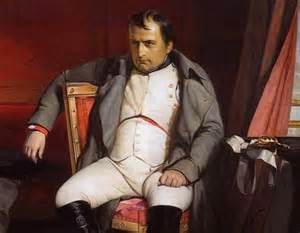
In the end, the conservative with a 'small c' United Kingdom ended up with a Conservative with a 'big C' government, as is their usual wont in these islands. The only interruption in the last 36 years of Conservative rule came when the Labour Party essentially ditched any notion of being socialist and became instead a mirror image of the Conservatives. Basically, they out-toried the Tories. This seems to be just about the only way they have any chance of being elected in this somewhat insular country. Napoleon Bonaparte was perhaps displaying a fair degree of insight when he made the observation some two hundred years ago: “L'Angleterre est une nation de boutiquiers.”

One of the things I have not missed about the UK is the class warfare, although it seems to be a battle fought by just one side these days. The wealthy, and those many politicians who represent their interests, seem forever engaged in finding new ways to dis-empower the poor and make their plight ever more desperate. The poor, for their part, are just struggling to keep their heads above the ever rising tide. The word class is perhaps particularly apt in this context, given that many of our current crops of Tories, at least the influential ones, shared the same school, Eton. Some of these, notably Messrs. Cameron, Osborne and Johnson, went on to Oxford, joining the (in)famous Bullingdon Club and having a jolly spiffing time...


Oh well, as an old friend used to say, 'If things don't change, they will stay the same.' Or perhaps the Thai saying, 'same old, same old' is more applicable here.
Within a week or two, after the euphoria of victory, it will be back to the internecine in-fighting that the Tories specialise in. If things revert to the normal pattern that the Conservative Party loves to indulge in, there will be endless trench warfare within the party, factions within factions, particularly over the issue of Europe. One of the joys of travelling is leaving all this far behind.

Hopefully, within a week or two, I can set out once more for another part of the world and leave the rather dull, archaic and downright illogical machinations of the UK's political system to its own devices. There is some chance that I will be able to head off to Spain, perhaps Girona, Barcelona or Tarragona, in the very near future. If all goes well, I intend to spend at least a day or two in Madrid as well. Given the current state of the weather, and the current state of the politics here in the UK, the continuation of my travels cannot come too soon for this nomadic flaneur. 

Friday, 1 May 2015

Needing a little energy...


Much as it pains me to say, this week I find myself in tax dodging Starbucks, in its Epping incarnation, famed for its 'Swiss' coffee and creative accountancy. My excuse is that I needed a decent internet connection and also a little space away from friends, many of whom view the idea of contributing to Starbucks' coffers with some distaste.
After another week in the UK, I realise that my definition of a pleasant day seems to have changed quite drastically over the past couple of years. Gone are the days of finding 18 or 19 degrees centigrade comfortable; after spending weeks, or even months, in the mid thirties, such days now seem positively chilly. Odd too how one notices all the little aches and pains that a body is heir too in such weather as is prevalent here in the UK. In Southern China and, particularly, in Thailand, such things scarce came to my attention. Perhaps the last few years have rather spoilt me in this way, now the prospect of spending months of one's year in such a climate as here in the UK seems positively unpleasant.
One of the most positive aspects of my recent travels has been just how healthy, how energetic, I had been feeling. I am, hopefully, not quite over the hill yet, but certainly could be described as a tad long in the tooth. Yet during the past five months it has been noticeable just how well, how energetic, how downright healthy I have felt.
For much of this time I have become increasingly interested in Chinese health systems that relate to the idea of chi. For those who have never heard of such a notion, chi is defined as a universal energy that exists in all living things. To feel well, according to this paradigm, one has to find ways of increasing one's chi, or at least to having access to good quality chi. The latter, in the Chinese system, is considered a matter of clearing the body of stagnant and stale chi, and replacing it with fresh and flowing chi. The techniques evolved by the Chinese Taoists were originally known as qigong. As ever with Chinese, the sound of the words is a lot more exotic than its literal translation of 'energy work'.

Over the last few years, such esoteric health systems seem to have played a significant role in my life. At times, it almost feels as if these ideas have found me, rather than me them. My first exposure to the concept came about seven or eight years ago now. At the time I was severely incapacitated due to nerve damage from a previous climbing accident, the effects of which had dogged me for most of my adult life.
One day, whilst wandering along a local High Road, supported by a pair of walking sticks, I happened to notice an advert for acupuncture in the window of a shop that specialised in all things Chinese, and particularly Traditional Medicine. I tended to notice a lot of such things in those days. One of the benefits of finding one's normal walking pace to be as painfully slow as mine was at the time, is that one finds one has time to notice an awful lot more detail than was previously the case when I would blithely yet somewhat blindly wander the streets in good health. In my youth, I had often rushed around at a helter skelter rate as is the rather over-urgent norm of our present day society.
On enquiring how much such treatment would set me back, I was informed it would require a rather chunky £360 for 12 sessions. At other times, I might have been reluctant to spend such sums on what seemed to me to be a somewhat fanciful form of treatment, but as being confined to using a pair of walking sticks just to get about tends to restrict the things one wishes to spend money on, it seemed a reasonable idea to at least give acupuncture a chance.

I think my interest was also piqued as the year before I had spent much time in researching a book about the idea of a vital life force, and how this same idea seems to crop up again and again, being found in different guises in many cultures and spiritual systems around the World. I had managed to complete several chapters of the book covering such interesting notions as prana in yoga, huna in the Hawaiian spiritual system, odic force as explicated by Von Reichenbach in the 19th century, Henri Bergson's Elan Vital and even Wilhelm Reich's intensely sexual idea of a universal orgone energy.
Researching and writing about such things had been a pleasurable experience as I found many similarities in these various systems, and was fast confirming the idea that they were all essentially talking about the same thing, albeit using vastly different terminologies. All was going well with the book until I reached the chapter that was to deal with the Chinese Taoist idea of chi. Although it was clear that the concept was, in many ways at least, quite similar to the other examples, it seemed that the more I looked into it, the more complex and the more subtle the ideas became. In the end, it struck me as unfair that I should mislead any potential readers of the book by pretending I had sufficient knowledge of the concept of chi to warrant giving my opinions on the subject.
My first practical exposure to these ideas came with that first course of acupuncture. Many of a more scientific bent tend to want to decry the effects of this system and, it has to be admitted, there are many aspects that don't easily fit into Western ideas as to how the body works. Some of the critics tend to observe that any positive effects are probably down to placebo effects alone. My own expectations had been initially very low, but I did think that, given my parlous state at the time, it was worth trying at least.
Despite my low expectations, within a few weeks I was able to do away with one of the sticks. Within another month, I was walking unaided for the first time in quite a while. Whether I understood what was occurring or not, clearing something had changed. At the end of the treatment, I found myself walking relatively normally again and, quite pleasantly, out of real pain for the first time in years. There was a leftover numbness that stretched down the side of my right leg and into the foot, making moving the toes of that foot more or less impossible, but it seemed a small price to pay, generally preferring pleasantly numb to positively painful.
Such experiences made me quite open to the suggestion that I should indulge in a little qigong whilst I was in China. Again my expectations were relatively low, but even after a short while my flexibility began to improve. Also, my general sense of well-being, of joie-de-vivre even, had clearly taken a turn for the better.

After about three weeks I began to notice that feeling was returning to my toes and, lo and behold, for the first time in years I was actually beginning to move them again. At first the movements were slow, barely perceptible in fact. I even dismissed them originally as mere wish fulfilment. Over time though, little by little, strength began to return, and with that strength came an ability to balance on that foot once again.
My understanding of nerve damage had led me to believe that such results were nigh on impossible, but on the other hand, it is hard to deny one's own personal experiences even if they don't fit the paradigms one it given by Western medicine. In the couple of months since, the numbness has continued to subside but the old pain has not returned and, as an added bonus, the strength seems to be gradually returning to muscles that had been dormant for many a year.
Looking back on my time in China from a distance of some weeks, I have come to realise that much of what I valued and enjoyed in China were the remnants of the past, the gifts of a long and fascinating history. The philosophy, the spiritual systems, even the architecture of previous dynastys has left China with a deep and rich source of inspiration and guidance which, unfortunately, much of modern China seems to be busily ignoring in its headlong rush towards a supposed modernity, which expresses itself by way of aping the worst excesses of Western decadence and capitalism.
As I sit here, slightly shamefacedly enjoying the delights of a fairtrade coffee in Starbucks in Epping, I find myself once more yearning to go back and enjoy the best of what China has to offer, even if that emotion is mixed with a dread of the worst. Yangshuo, with its clear waters, beautiful peaks, wonderful vistas and clean air beckons just as much as the East Coast cities with their constant noise, teeming crowds and choking pollution repel.

China is forever an enigma, its history and culture being both fascinatingly deep and subtle whilst simultaneously its modern developments are ugly and depersonalising almost beyond believe. I find myself both loving and loathing the place in almost equal measure...