Translate

Thursday, 7 April 2016

We Are All In This Together...


This week, I find myself back in the UK and enjoying a generous, if not particularly tasty, cup of 'Pike Place' from Starbucks in Epping. Starbucks are the sort of company that, in general, I tend to avoid as representing some of the more irresponsible strategies and tactics that such concern employ in order to avoid paying taxes in the countries where their outlets are actually located. I think my favourite from Starbucks was the importation of coffee beans from that well known coffee 'producer.'..Switzerland (the word 'riiiight' springs to mind). Given the subject matter of today's blog however, I thought that it might be appropriate to put my head in the mouth of the beast.
During the last few days a scandal of global proportions has broken over the tax dealings of many of the rich, powerful and famous. I use the word 'global' advisedly, as those implicated range from the father of the British Prime Minster David Cameron to the brother in law of Chinese Premier Xi Jingping, from the Royal family of Saudi Arabia to the business 'associates' of Vladimir Putin, from the talentless Simon Cowell to the talented Lionel Messi. All it would seem, if the evidence of the released documents is to be believed (it does indeed appear to be a very well substantiated leak), have been happily avoiding large amounts of taxation in the very countries that they are plying their trades or form part of the political or business establishment.
As I read the allegations that related to the apparently nefarious doings of David Cameron's father, Ian Cameron, and his investment company, Blairmore Holdings, I could not help but recall the UK prime minister's words when he took up the reins in 2010: “We are all in this together.” At the time, I was under the impression that what was being referred to was the austerity being imposed as a result of the financial crisis and bank collapses of 2008 instigated by the banking services industry. Now, in retrospect, it appears that 'we' may have been referring to the wealthy and powerful, and 'this' the massive tax avoidance that so many of them seem to have indulged in. 
 
In Iceland as I write, Prime Minister Sigmundur David Gunnlaugsson is facing calls to resign following revelations that his wife was involved in just such practices. Odd how often that seems to happen. Perfectly respectable pillars of the community like the Maxwell brothers or Philip Green seem to be fortunate enough to have very pro-active wives suitably concerned with preserving the family wealth by becoming adept at the nefarious skills of tax 'efficient' conduct. Lucky them…
In Russia, the trail has led to a very close friend of the premier, Vladimir Putin. A cellist by profession, with apparently no business acumen, yet the documents released show him to be again and again being involved in multi million dollar deals that he seems to have little or no knowledge of. I suppose that in such circumstances it must be comforting for the Russian President to have a friend so adept at fiddling...
Vladimir Putin's favourite fiddler...
 In China, it seems that the documents implicate the husband of the premier's older sister, Deng Jiagui. Xi Jinping himself has been running a well publicised campaign to stamp down on the widespread corruption within official and business circles in China. Interestingly though, his own families wealth now runs in the hundreds of millions. I for one am very impressed with the investment skills which obviously he and his family must possess. His salary is in the region of $22,256 a year, and that only after his rise to the top of the political tree. It would seem quite an achievement to turn such limited resources into the huge financial empire he now finds himself the head of.
Chinese leaders with their financial adept relatives...

Reading the Chinese Communist Party's media outlet, The Global Times, one has to be impressed at the prowess of the investigative journalism on display. The only article published to date talks of 'Western smear campaigns' (conveniently ignoring the fact that many Western leaders themselves have been implicated) and fails to even mention the connections leading to the premier, or even to his family. Journalistic truth is a very flexible concept at times, but perhaps never so much as is the case in China.
The usual blowhards represent such a scandal in terms of East versus West, or maybe capitalism versus communism, or some other such anachronistic nonsense. The reality, unfortunately, is far more sinister. Worldwide the gap between the wealthy and the poor has been growing at a huge rate for the past few decades, getting increasingly worrisome with the passing of time. Unfortunately, with globalisation and with the influence of financial services, banking and moneyed concerns on governance, there now seems to be little or no defence to the hegemony of the plutocrats.
All very sad. The likely result of all this will be a few scandals here and there, a few speeches by government ministers about the evils of tax avoidance, but very little action indeed. Those that are making the laws are themselves the beneficiaries of such practices. Given that, it would appear highly unlikely that they will pay anything other than lip service to reform.
The UK government itself perhaps represent a particularly adept use of rhetoric followed by a complete and utter lack of action. Three examples among many spring to mind. The extremes of the Murdoch press were supposed to be regulated after a range of illegal activities were perpetrated by them, the Prime Minister himself making several stirring speeches on the subject. The result six years later? Nothing. Even a refusal to sign through the very limited proposals of the Levonson enquiry. Rupert must be pleased, at least. Secondly, the regulation and prosecution of the bankers who caused such damage to the World's and the UK's economy back in 2008. Eight years later we have had precisely one prosecution, a low level banker of little importance, and no enforced regulation whatsoever. Thirdly, the current topic – clamping down on tax avoidance schemes. Again many a stirring word has been uttered by Messrs Cameron and Osborne on the subject. The result of all these fine words? Nothing, nada, zilch, not a thing. Osbrone carries on enjoying the hospitality of Russian oligarchs whilst Cameron works out ways to word statements to avoid his own all too apparent apparent culpability.
Osborne and his yachting companions, Oleg Deripaska and the Prince of Darkness himself...

Sad times indeed.
Back in Starbucks I finish the admittedly generous cup of Pike Place. It is a comfort to know, as I imbibe the very last drops, that scarcely any of the £1.95 I paid for said beverage will find its way into the hands of the exchequer but will instead be lining the pockets of the already fabulously wealthy but obviously still very needy owners of this enterprise...

Saturday, 19 March 2016

Juggling commitments....


If there is to be any peace it will come through being, not having.”
Henry Miller


It is late on a balmy Friday evening, something of a relief after the mercury touched 41C mid-afternoon; a slight breeze stirs the air pleasantly. I find myself sitting in the open air Tara Guest House restaurant enjoying a large and very refreshing Chang (Thai beer) and a plate of what are described on the menu as 'Pineapple Flitters'. These come with either honey or chocolate, or even both if one is feeling particularly indulgent. My lifestyle here is generally quite healthy but this, I have to admit, forms something of an exception.
I did actually stay here for a few days on arrival, opting for the very reasonable 'superior' suite at a relatively expensive £12 a night. Normally, by this stage, I have settled into some kind of long term accommodation, usually involving a cold shower and a lack of air conditioning, but this time I have been in somewhat indulgent mood and so the pleasures of fresh sheets, fresh towels and a small but cooling swimming pool have proven too much to resist.
Although such temptations sometimes get the better of one, I still find myself frequenting the much-loved but distinctly down market 'Jolly Frog' on a regular basis. The accommodation may not be the best in town and the service internationally renowned for being terrible, but they do have the most wonderful garden and a peripatetic clientèle of wonderfully eccentric characters, some of whom seem to have become regular visitors over the years.
The garden is also a wonderful place to take some exercise; the air is fresh, the flowers beautiful and the fact that the river Kwai runs so close by all lend a unique ambience to the place that has charmed many a weary wanderer (including your footloose flaneur). When I arrived last week, I immediately headed for the place to practice a little qigong and indulge my current fascination for swinging nunchucks. I have little interest in using such weaponry for any aggressive purpose, but love learning the wonderfully flowing and co-ordinated movements that are necessary if one is to perform with any degree of gusto.
On the first day in the garden, whilst practising a few of the more advanced moves, I met a German guy by the name of Alex and a young French lad called Ansulyman, both of whom were practising juggling in the same garden. A mutual exchange of views on the subject of skill acquisition followed, and so it was that, for the last four or five days at least, an informal school dedicated to such performance arts sprung up quite spontaneously amidst the palms, tamarinds and bougainvillea of the Jolly Frog.

Others guests and various itinerants have happened by over the last week and found themselves drawn into the process. At any given time one can find oneself learning various forms of juggling, particularly with balls and skittles, nunchucks, qigong, tai chi or other, equally exotic forms of martial and performance arts.

The atmosphere is very informal, relaxed and supportive; all in all, very conducive to learning such skills without any sense of pressure and, basically, just for the sheer, unadulterated pleasure of it. For my part, I have focussed so far mostly on picking up juggling and am now, after a few days of trying, able to manipulate three balls at once without injuring the spectators or dropping them too frequently. One young man has progressed from neophyte to attempting five balls in a mere four days, although it has to be admitted that it can be a somewhat hazardous undertaking to stand anywhere in close proximity when he attempts to do so. 
 
When learning new skills is a pleasure, almost an indulgence, such activities become very pleasant indeed. I sometimes think back to the pedagogic horror which formed my own education, to the woefully inadequate methodologies employed, to the stress laid upon discipline imposed from the outside (whilst discipline is clearly necessary, that imposed from within is often far more powerful, and far more effective), to the simplistic 'chalk and talk' methodologies, and many other unpleasant and ineffective conventions, and realise that, for me at least, conventional education was merely something that I had to survive rather than having any real value in terms of knowledge or skills acquisition.
Since those far off days and the daily frustrations and humiliations one suffered in the process of poorly acquiring skills that were often completely useless from that moment forward (working out tangents has not come up even once in the intervening years, and as for the learning of the (mis)doings of various Kings and Queens of England… such knowledge only turned me into a lifelong and convinced republican). Since those happily far-off days I have invariably found myself enjoying learning a range of new subjects and competencies in so many areas. All of these seem to have been acquired relatively easily, just as long as I was given at least a modicum of encouragement and support to do so. Looking around the 'school' in the Jolly Frog this morning, the thought struck me that such learning is so normal, so natural, so enjoyable for all of us, if only the right ambience is created.
Back in the Tara they are closing up for the night and I find myself faced with a pleasant ten minute walk back to my hotel on the river front. Kanchanaburi is even quieter this year; so quiet in fact that one wonders how long the almost deserted bars can survive. On the other hand, those of us who are more open to the less inebriated, daytime pleasures of the place are enjoying the current state of affairs immensely. And so, as this late but still
very steamy hour, I must bid thee a fond farewell and prepare this rather over-exercised body for a night of hopefully recuperative slumber.
Night night….

Wednesday, 16 March 2016

Too far to walk...


"We begin here then, in the very quick of the nightmare, in the crucible where all values are reduced to slag."
Henry Miller - The Air Conditioned Nightmare

This evening I find myself enjoying the slightly salubrious yet subtly seductive comforts of the 'Jolly Frog'. This particular guesthouse, perhaps more than any other, was responsible for putting Kanchanaburi on the map as a backpacker's destination. That was many, many years ago now, and of more recent times it has become something of an emblem of Kanchanaburi, despite an ongoing process of delightfully delapidating degradation that has rendered its décor somewhat dated by modern standards . To say the rooms are basic is to understate the reality. This is not the place to come if one requires high levels of opulence in order to enjoy a break. On the other hand, its throwback decadence to its glory days of the seventies has an almost timeless appeal to a huge variety of travellers. The clientèle this evening are an odd mixture of the geriatric remains of a peripatetic generation and a cosmopolitan group of footloose and fancy free youngsters trying to reinvigorate the bygone days of backpacking yore.
In short, the Jolly Frog has a rather pleasant way of attracting the outlandish and the eccentric. Its garden is perhaps its most notable feature, sitting as it does aside the River Kwai. Unlike the rest of the establishment, it is always looked after with great care and, perhaps, even love. As I tap out these notes on a hot and steamy Wednesday evening I cannot help but overhear the delightfully bizarre conversations of the youngsters sharing a beer or two and swinging to and fro in the hammocks in the centre of the garden. From the accents I am guessing we have several Spaniards, a Frenchman or two, a young American with a predilection for swearing every time he wishes to emphasize a point and several girls, perhaps one American, one French and one English. They, much like myself, are enjoying the late night delights of a bottle or two of 'Archa', a cheap but cheerful Thai beer that sells for the very reasonable 49 baht in the local convenience store, and the soporific atmosphere of a warm night relaxing beside the river.
Actually, I have to admit to being pleased to be back here this evening after a very unpleasant sojourn into Bangkok over the past couple of days. In my years of travelling I have visited many, many cities from Moscow (very dull) to New York (very noisy), Barcelona to Venice (both fascinating), Cairo to Izmir, and many others far too numerous to mention, but I cannot think of any city over decades of travelling that is quite as unremittingly unpleasant as Bangkok. It is a dirty, dingy, dilapidated dystopian disaster of a city that has few, if any, redeeming features.
I spent last night in a hotel 2.5 kms from Don Mueang Airport, chosen for its proximity. In practice, it took nearly an hour and a half to find said hotel (the Pool House Guest Residence). My first resort was to attempt to hire a taxi, but trying to communicate with the drivers of these vehicles proved to be almost impossible. None of them seemed to recognise the name of the hotel, even though I had it written in both English and Thai. None of them seemed to have the foggiest idea of how to read a map, the very concept seeming to throw them into a state of confusion. None of them seemed to want to go on the metre, even though the law requires them to do so, preferring attempts to arrange a hugely inflated price beforehand instead. 
 
After several efforts that merely resulted in increased frustration, I resolved to walk to the hotel. This was probably a mistake as it took vastly longer than expected owing to the lack of anywhere to actually walk. What pavements there were were invariably broken up to the point of unsuitability, the rest of the journey being a case of either walking through a seemingly endless building site or against the stream of a apparently never ending cascade of recklessly driven motor vehicles.
Eventually, I found a 7-11 store that I knew to be in the vicinity of the guest house. I asked the girl behind the counter if she knew the hotel. She did, but she assured me that it was far too far to even consider walking. Instead, she suggested I take a motor bike. Tired, sweaty and a little fed up (a rare emotion for me), I took what I perceived as a rather desperate option and clambered aboard a Honda 90.
The rider rode thirty metres to the West, twenty five metres to the North, followed by one hundred metres to the east and…. we were there. As an expression of the idea of 'too far too walk' it seemed to be lacking something vital that, in the West at least, we tend to call 'distance'. 
 
To be fair, the Thai conception of 'too far to walk' is very different to the British or American. To those of us in the West, the expression would indicate several miles of challenging perambulation, whereas here in Thailand 'too far to walk' means anything above 40 yards or so. An old joke sprang to mind: question“What do you call a person walking in Thailand?”, answer “A tourist!”.
(Actually, I was tempted to use another, very much similar, line earlier, It was along the lines of 'what do you call someone hopelessly lost in Bangkok', the answer being, obviously, 'a taxi driver').
It is hard to conceive of a form of words that will convey just how hopelessly unpleasant Bangkok is. It consists of street upon street, road upon road, of sheer, adulterated ugliness. Even the centre of town, the area around the Royal Palaces, are notable for just how tacky the use of excessive gold leaf can appear. It comes across as a depressing display of unjustified opulence in a land where most of the population are struggling even to put a meal on the table.

Such tasteless decoration accounts for only a small area though, the vast majority of Bangkok being an endless chaos of cars and cables, broken pavements and unrepaired holes, officious policemen and self-righteous military men. From East to West South to North, inside and outside, over a vast distance, there is barely anything that one could recommend to someone about this truly atrocious city.

Luckily (I survived!), I now find myself back in the far pleasanter environs of Kanchanaburi where, if all goes well, I intend to spend the next couple of weeks reading, writing and learning to juggle. The last being the result of meeting Alex, a professional German juggler who was happy to pass on the basics to me in return for a few lessons of twirling nunchucks (I am no master, but sufficiently competent now to start a complete neophyte on the path towards a level of competence).
The hot season has arrived, with rumours of temperatures in excess of 40C on the way in the coming week. This seems a good enough excuse to me to curtail the more physical aspects of flaneurial activity and to concentrate instead on the process of writing, both this blog and a book I have been planning for a year or so now. The prospect of afternoons spent in air conditioned cafés slowly imbibing Americanos and fruit smoothies whilst tapping away on my netbook seems pleasant indeed in this heat...

Friday, 4 March 2016

Excuse me, but...


Today I find myself in the cosy environs of Hey! Coffee, yet another relatively new establishment that is to be found just off the Hongfu Road in the vicinity of the Dongguan Exhibition Centre. The coffee here is particularly excellent and the staff seem very helpful, if a little young and manic. They are a pleasant bunch, but occasionally, their patience and civility can be sorely tried by some of their excessively demanding Chinese customers. There is a peculiar way of addressing staff here that, to many a Western ear, would seem at the least rude, if not actually downright ignorant at times. Greetings of 'Ni hao' or 'Zao shang hao' ('hello' and 'good morning') will often be conspicuously ignored, it being seemingly beneath the customer's dignity to respond to mere serving staff.
Perhaps it is the overcrowding here, there are an awful lot of people crammed tightly into already overcrowded cities, or perhaps it a deeper, cultural aspect, but whatever the cause, notions of civility and patience do not come easily to the people of China. There is a desire to jump each and every queue at any available opportunity, to take advantage of another person whenever possible, to generally and quite ruthlessly (callously?) ignore the needs of others whilst looking after number one. For example, it is not unusual to wait ten to fifteen minutes for service at a railway station ticket office, only to find that at the last moment someone will jump in from the side, having not queued at all, thrust his money in front of the clerk and demand to be served. More often than not, that demand will be met rather than rejected, as such ways of conducting oneself are so common here that they barely merit a raised eyebrow from the ticketing clerk. For me, raised in a gentler culture, this somewhat refractory behaviour can be experienced as somewhat jarring. 
 
There is a lovely old cliché, one very much worth taking note of, that comes to mind: 'when in Rome do as the Romans do', but sometimes, some behaviour seems so, how can I put it, downright rude (?), that one really does not wish to find oneself behaving in similar ways.
An experience during the last week may serve to illustrate the point. A Chinese friend of mind needed some treatment in a local out-patient's department for three problematic teeth. For the sake of avoiding confusion, let us call her 'Patience'. Now Patience was in quite some pain, so much so that it had even crossed her mind to try to be admitted as an in-patient, but after some hesitation (she was very nervous at the thought of dental treatment) she opted for outpatients. After a short wait for service, a young dentist led her to a cubicle, one of four in the clinic, and proceeded to work on her troublesome teeth.
Within a couple of minutes another patient, accompanied by his noisily coughing wife, had turned up at outpatients and, without the slightest hesitation, walked straight into the cubicle and demanded the attention of the dentist who was, at that very moment, working on Patience's teeth, whirling drill in hand. Showing admirable patience, he responded politely to the impatient patient and told him to wait in the outpatients reception area. In the next few minutes, two more impatient outpatients barged impatiently into the cubicle occupied by Patience and her increasingly impatient dentist.
By this time, I myself was beginning to lose patience with these impatient outpatients, and attempted to block their access to the dentist. It seemed to me that the hygiene considerations were serious enough, but with Patience being somewhat nervous already, the last thing she needed was for her dentist to be physically distracted whilst in the course of drilling her oh so sensitive teeth. In an attempt to at least slow down the interruptions, I sat myself across the entrance to the cubicle and challenged the impatient outpatients to show a little more patience, much to the relief of Patience, as she later patiently explained to me.
These people could try the patience of a saint.
In my travels I have come across many cultural differences, many attitudes that were surprising, some even challenging at times, but I don't think I have ever come across a country where such simple decencies as showing even a modicum of sensitivity to the needs others is more often, and more blatantly, challenged than in China. It is so normal here as to be routine.
On several occasions now, whilst out dining, I have had things taken from my table without so much as a 'by your leave' or even an acknowledgement of my existence. Such things can be anything from the pot of tea from which you are drinking to the table napkins. Other customers will just walk up to your table and simply take whatever they want or need, usually without offering a any request or explanation.
One of the things one hears most often from mainland Chinese is how proud they are of their five thousand years of culture. In many ways this attitude is justified by a long and glorious history of such things as the arts, literature, poetry and science, all of which is very impressive indeed, but in areas of the most basic of attitudes, respect for the existence of others, this society seems to lag far, far behind much younger cultures than itself.
The Chinese government themselves have become aware of the growing problem of Chinese travellers embarrassing their home country by acting in less than pleasant ways either on their journey (many flights have been forced to abort following disputes, and even fights, whilst airborne) or when they reach their destinations, thus giving their country of origin a bad name. Quite lengthy articles on the subject can be found on government's media organs (such an appropriate word…) such as 'The Global Times' and 'The People's Daily'. 
This fine young lad made his mark in Luxor recently by adding 'Ding Jinhao was here' to a three thousand year old artwork...
 
The rudeness is not a matter of over-zealous xenophobia, although this too can be a problem in China. The people routinely treat each other in exactly the same rude way as they treat 'weiguoren' (foreigners). Five minutes standing at a zebra crossing will amply demonstrate this point. The cars will do absolutely anything rather than stop for a pedestrian. One can consider oneself fortunate if they even slow down or change direction. Any busy junction will also provide further proof, the motorists will routinely cut each up in the most blatant and ignorant of fashions, barely seeming to notice the presence of other road users. In the three months I have been here in China I have seen numerous minor accidents, more or less each and every one of which could have been avoided with just a modicum of patience and respect for the other road user.
To be fair, once one gets past this habitual rudeness, one often finds a friendly and even quite delightful people beneath the façade. There are indeed many aspects of Chinese attitudes and culture that other countries could learn from but...basic civility is not one of them! There may well be many reasons for this; the cultural revolution, the endemic corruption which blighted the society for many years, the pervasive influence of Confucius and 'filial piety' (a notion that tends to emphasize family links and those close to your inner circle but has the effect of downplaying the significance of those outside the group). Such justifications are all very well, but from a personal and experiential point of view though, this ubiquitous rudeness can, in all honesty, simply become rather tiresome at times.
Back in the coffee house now I find myself pondering my upcoming jaunt to Thailand to the soporific strains of easy Western jazz and Ancient Chinese folk music. There are many, many aspects of China that I will miss, it is a fascinating and varied country to visit, but there are also some things that I will be very glad to leave behind too...

Saturday, 27 February 2016

The Fine Art of Reframing…


This week's report comes from the Micro Coffee Shop in Dongguan. Fortunately, the name refers neither to the size of the premises, rather generous, or to the size of the portions, again quite copious. For some strange reason, the more the economy creaks and groans towards the possibility of recession here, the more these coffee houses spring up. From the point of view of a nomadic flaneur in constant need of refreshment and a place to write, this is a very positive development. On the other hand, one wonders what is happening to the underlying economy here as the slowdown starts to bite deeper and deeper.

The coffee house itself is just one of a chain one sees in South China. Micro Coffee's shops seem clean, well managed and quite appealing. The seats are comfortable with a pleasant selection of coffees on offer. What more could a peripatetic flaneur wish for? Whilst enjoying the fayre on offer in such coffee houses, it is not unusual to enjoy a little conversation, or even some gentle banter, with the locals, or at least those that have a smattering of English.

One of the crucial factors one has to realise when discussing any issue with Chinese citizens living within the country is that their own sources of news are very restricted. There is some debate, online and even occasionally on television, but essentially the discussion is down to variations on the theme, rarely disagreement with the theme itself.

This, naturally, is very advantageous to the powers that be (a lovely phrase, that one!). They don't really need to win the debate or convince anyone as other governments around the world find themselves having to, they simply decide the policy and instruct the media to broadcast in, together with instructions as to how exactly it is to be framed.

Many years ago, seems like another lifetime now, I studied the somewhat dark arts of NLP (Neuro Linguistic Programming) as developed by Richard Bandler and John Grinder. I say 'dark arts' as one pretty soon realises that although such practices are often presented, and indeed used, in a therapeutic context, they can and are readily abused by such amoral or immoral folk as those involved in government or advertising, to name but two areas where these techniques have been roundly used to exploit, cheat and generally take advantage of the unwary.

(On this front, I think if I hear one more person assure me that advertising has”no effect on me” I think I will start to tear out my already very short hair. The last invulnerable soul who assured me of this being the case was the proud owner of a Hummer…)


The Chinese economy is in some trouble now. One hears of firms going bust on a regular basis and simply by looking around it is plain to see that many shops are no longer occupied, even in some of the primest of locations. The government here though, is still as popular as ever, which speaks volumes for their skills at the fine arts of presentation and reframing. In NLP terms, a reframe is used to realign or reshape one's thinking on a given issue or situation. It is a very powerful technique, perhaps more so because of its ubiquity; there is scarcely any situation that a skilful reframe cannot change one's perception of.

At the recent New Year's celebration it was very apparent that the amount of money spent by local government, usually so generous in such affairs, was relatively mean. The fireworks in particular were noticeable by their absence. This sad state of affairs was presented as the administration practising those fine traditional Chinese values of prudence and economic restraint. A classic reframe, but one that worked very well, some people even telling me how much they admired the government for returning to such sensible ways.


Basically, in China, if you can couch the reframe in terms of nationalism and especially in terms of traditional Chinese culture, you are halfway there already. Those in power, like those who remain in power around the globe, know exactly what buttons to press when needed and exactly how to structure a needed reframe to cast themselves in the best possible light.

Another classic tactic along these lines is to point out that although things may be bad here, they are a lot worse somewhere else. Far too many times now, when the subject of the poor air quality comes up, I hear people referring to the awful smogs of London. Now, while it is true that there were indeed awful smogs in London, these mostly came to an end in the 1960s with the Clean Air Act. To listen to many people hear one would think that the news reflects the current state of affairs in the UK's capital. In one recent dinner conversation, my fellow guests seemed genuinely surprised, even a little shocked, when I showed that day's figures from Dongguan and London via an app on my Windows phone. London's air quality figures were about one fifth of those in Dongguan (pm2.5s at around 35 compared to Dongguan's 180). Beijing, needless to say, would suffer even more by comparison.


Perhaps the bleakest and most cynical tactic of all in times of economic hardship is the call to patriotism. Nationalism here is already very strong and needs but little stoking to work people into something of a patriotic fervour. In this way, China is very different from more mature systems such as those found in Europe or America. Often in those cases there are enough worldly wise folk willing to point out such tactics that the politicians are often weary of employing them. Not so in China where if there is any opposition, it will scarcely dare to raise its voice (perhaps wisely) anyway.

Currently China is involved in territorial disputes with at least seven other states, any of which can and is used to stir up nationalistic feeling when required. Perhaps of these, the dispute in the South China Sea is the most likely to flare up into something very dangerous. In this particular instance, China finds itself in dispute with the Philippines, Vietnam, Brunei, Indonesia and Malaysia. One worries that, given the current deteriorating economic situation, it could prove all too tempting to focus the population's attention away from the problems at home and into such dangerous waters.


Back in the coffee house some of my fellow imbibers are now enjoying a game of cards, whilst others watch basketball on a 42inch screen. The latter is very popular here, Dongguan in particular being known as the 'City of Basketball'. Personally, it has never been to my tastes, consisting as it does of a lot of very tall men running down one end of a court to put a ball into a net, then running up the other end and doing the same thing there. The highlight seems to be when they occasionally bump into each other but, as highlights go, its not particularly riveting.

All seems normal, perhaps even prosperous at this level. Beneath the surface though, it is not hard to detect the stark reality of an economy and a people who are  beginning to scent the unpleasant odour of recession. As ever in China, the stage managing is very impressive, but also as ever, economic reality will, in the end, prove very difficult to conceal forever.


Friday, 19 February 2016

Very Superstitious


This weeks report from the far side comes from a very pleasant little café in South Dongguan which goes by the name of 'Green Light'. Apparently they were going to go with the name 'Red Light' but realised that in that case no one would stop in China…

I just asked the helpful young chap behind the counter for the wifi password and was told that it was 'ba leo', which translates to eight sixes. Such a password in not unusual in China where belief in the powers of numbers, in many ways similar to the Western superstition of Numerology, but far more widespread and far more accepted here. The number six is thought to encourage the smooth running of events, and hence is considered in a very positive light. Quite a few passwords, and a huge number of telephone numbers for commercial companies, including large amounts of this particular digit.

The love for the number six though, is as nothing compared to the number eight, a number that the southern Chinese equate with wealth, mainly because of the sound itself 'ba'  is very similar to the Cantonese word for wealth 'fa' (at least when these words are spoken in an appropriately Cantonese accent!). Given the obsession with wealth, and the ostentatious display of it, in this country, it is small wonder that this particular superstition is so widespread.


A common site in this part of China is that of huge banners hung down the sides of new developments encouraging potential buyers to contact the appropriate developer via a telephone number containing huge numbers of eights. The idea is twofold; firstly, compliance with the superstition itself, and secondly to tempt investors into parting with their hard earned cash in the hope that the apartment itself will be a good investment, hence bringing the much desired wealth.

In much the same way the word 'password' is the most common password in English speaking countries, if you want a decent guess at one in South China try '88888888'; several cafés I have utilized in this trip have used that very combination of not very random digits.

At the other extreme is the number 4, or 'si', which is unfortunate in that it sounds very much like the word for 'death'. As such, nobody seems to want to have much to do with it here. The superstition is so ingrained that apartment blocks and hotels very often do not have a fourth floor, simply skipping from three to five when needed. This makes lifts and tad confusing as the panels have a tendency to be a little inconsistent and jumbled in order to cope with this odd discrepancy.

Again there is also a commercial motivation for this lack of a fourth floor, especially in hotels and new build apartment blocks. In practice these spaces would be hard to fill as few Chinese would want to go against the trend. Also, on a practical level, if you wanted to resell an apartment, the investor would likely face the self-same problem as the developer. The bad luck becomes a self-fulfilling prophecy…

Superstitions of these sorts crop up again and again in everyday life in China. Recently I was enjoying a coffee with a Chinese Friend, David, and was happily making notes of the conversation in an attempt to improve my Mandarin. Without thinking, I had taken out a red pen and was merrily scribbling away when David stopped me mid-sentence. He seemed a little perturbed and asked me if I was aware of the significance of red ink in China. Up to that point I had no notion that such a thing could be considered problematic at all. David explained that in previous times the use of red ink was associated with documents on which a condemned man's name would be written in that colour. Since those far off days the writing of any name in red ink is either thought to be very unlucky or simply rude, the idea being that you wish ill for the person named.

Superstitions of this sort seem to permeate life here. Even otherwise quite intelligent people do not seem immune to these beliefs. A tai chi master who I have come to know quite well is sometimes reticent to leave her home on certain days if ill omens are indicated in her i ching inspired calender. She has a believe that she is a 'fire' person and so hates forests and glades, believing them to be somehow 'unhealthy' for her. When I was told this, the thought actually crossed my mind that living in the city of Dongguan with air pollution regularly at five times the World Health Organisation limit was probably a tad unhealthier, but I managed to bite my lip and restrain myself from uttering such an undiplomatic, if slightly more logical, statement.


Some time back I accompanied the aforementioned middle-aged tai chi master to view a flat she had a mind to purchase. After studiously looking around for ten minutes, she announced that the apartment had bad 'Feng Shui' and would not be a suitable place for her. Half an hour later we found ourselves looking around a much pokier, darker, more hidden away flat but, much to my amazement, after consulting her compass on numerous occasions she announced that the flow of energy was perfect for her and that the place had good 'Feng Shui'. 'Hmm….' I thought….


Back in the very pleasant Green Light coffee I have been joined by an estate agent persuading a young couple to part with their hard earned readies (literally reddies here in China – the colour of the ubiquitous 100 RMB note). The purchaser, his wife looking on nervously, is just about to sign on the dotted line. I wonder if the fact that today is the 17th of March has any relevance? Numerological thinking has people adding digits such as the 1 and 7 in 17 and coming out to 8, thereby rendering the day potentially a good one for investing in such things as property. Given the ubiquity of the superstition here, I would not be at all surprised if such notions played a part in the 'thinking' behind the decision to buy.

Strange World…


Friday, 12 February 2016

It's 2016, at last…


This week's blog comes from the pleasant confines of MoMo's café, just off the Hongfu Road in Central Dongguan. The café has only opened in recent weeks and still has a range of teething problems; the lack of electricity to the points being the most obvious. Still, one word and I had five different people running around trying to sort out the problem. Duly solved, I can now sit back amongst the minimal chic décor (actually, an odd mixture of minimal and New York of the 1990's)  and enjoy a very reasonable Americano together with a complimentary tea, a special offer for this opening month apparently. MoMo, who runs the joint and cooks a range of Western style snack dishes for her clientèle, buzzes around the table, ever wanting to practice her English or to indulge her apparently insatiably sociable nature.


New Year came and went, although it never did quite completely go as the festivities seem to go on for far, far longer than in other cultures. The event itself triggers a mass migration from the larger, first and second tier cities back to the smaller towns and villages. Such holidays in China I now assume to be the very worst time to travel as one is almost guaranteed incredibly long queues, huge and crushing crowds, and tiresomely draining delays into the bargain. I experienced one such festival earlier this year when I was unwise enough to travel to Guilin in the week before 'Tomb Sweeping Day'… never again!
This New Year's mass migration was further complicated by the visitation on South China of record low temperatures. Dongguan itself even had snow on the day I arrived – an event that brought out crowds of people to take snaps of this strange phenomenon. The local hub, Guangzhou, a city with a population over 14,000,000, suffered something of a crisis when 100,000 people were attempting to catch non-existent trains (cancelled due to the bad weather) and cramming themselves into an already over-crowded railway terminus. The people who heard about this on the news reacted in a fairly typical way for China and decided to head for the station even earlier, thus exacerbating the already dire over-crowding.


To be fair, the Chinese Authorities actually reacted to this situation fairly well, firstly by keeping social order (although apparently the crowd was remarkably good natured in the circumstances), and secondly by laying on extra high-speed trains at no extra cost, which enabled many of the travellers to be reunited with their families somewhat earlier than they had originally planned.
Family, it seems almost superfluous to point out, is extremely important in Chinese culture. So much so that people are willing to undergo the huge challenges of travelling at this time of year, 13 to 14 hour train journeys, hustle, bustle, overcrowding and almost endless aggravation in order to be received in the presumed warm bosom of their families. Understanding the importance of family here is fundamental to understanding Chinese culture itself. It is the one abiding notion that trumps all else in Chinese values. If you are in with the family, you are well in – you are welcome and treated royally. For those outside the group though, it is a profoundly different matter. In many ways this society is perhaps the very last in the world that should have pretended to be communist. The leaders here are fond of a phrase to describe the system of government: 'Communism with Chinese characteristics'. What this effectively means is something that is so alien to any notion of communism that would be intellectual recognisable as being such as to bear no relationship whatsoever. Instead, the critical factor is is family and, by extension, family connections.
I have struggled over many visits to pin some kind of label, some kind of name for the system here in China. Communism it is not, self-evidently so, but it is not really capitalism either, although capitalism comes far more naturally to the Chinese than perhaps any other system. The influence of Confuscius, for good and for ill, echoes down the years and is still critical to Chinese thinking to this day. However one labels the system, one has to admit that, for all its drawbacks and weaknesses, it works. Sometimes, it more than just works, it is a positively dynamic force for growth and change (at least in the economic sense – the environment is, of course, quite another matter).
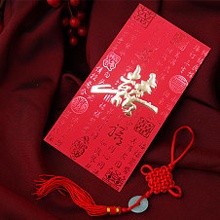
I was fortunate enough to enjoy New Year's Night (Feb 7th) with a family of a friend in Dongguan. The event was celebrated much like Christmas is in the West: an excess of food is consumed, too much alcohol drunk, too much spent on gifts of nebulous benefit to the recipient. Added to the more modern, at least for the Chinese, notion of giving gifts at this time, there is also the obligation to provide contributions to the nearest and dearest through the 'Hongbao' system. 'Hongbao' quite literally means 'red envelope', which will in practice contain a sum of money and is given by certain members of the family and friends to others within the group. Generally, the sums involved are between ten (£1/$1.50) and hundreds, or sometimes even thousands of yuan (the more well-off Chinese often love the opportunity to ostentatiously display both their wealth and their generosity).

The vast majority of families like to stay at home together rather than going to external, organised events. And the vast majority of such families will spend most of the evening, from 8pm to 12pm, watching the state sponsored TV special. Most of this extravaganza would not have been out of place 30 odd years ago in the West. It consists of comedic skits, songs, often of a patriotic nature, and large scale dance performances. It is all quite impressive, but feels somehow dated, harking back to an era of entertainment that has long passed in the West. Added to this however, there was also a disquietingly large amount of time given over to watching soldiers stamping their feet in unison and generally behaving as those in the military seem to love to do, ie shouting at each other in a very loud voice and acting like automatons. Patriotic songs followed this section. Maybe it is just me, but I always find such displays of mindless nationalism chillingly reminiscent of less pleasant aspects of  Europe in the 1930's.


Oddly, although there were many, many fireworks that simply went 'bang', often being so numerous as to create a ripple effective, there were strangely few colourful displays. Again I found this surprising for China, the very land where both gunpowder and fireworks were first brought into being. The actual stroke of midnight was something of a damp squib, rather than a pyrotechnic extravaganza; the odd bang here and there with no apparent co-ordination or order.
The next day's celebrations in Qi Feng Park were more impressive – although the fireworks were limited once again to the banging varieties, there were huge amounts of them at the Buddhist temple there. This was combined with the burning of huge amounts of incense with lent the air a very pleasant, if somewhat pungent, atmosphere and enveloped everything in a very fragrant smoke.


Back in the café, I find myself enjoying my first chance to relax and write for three days. The week-end and the days following were somewhat packed with visits and events, so much so that I find myself relishing this short gap of 'free time' here in the café. It seems that there will be more celebrations to come in the next week so, for now, time to gird one's loin, stay calm  and carry on regardless…